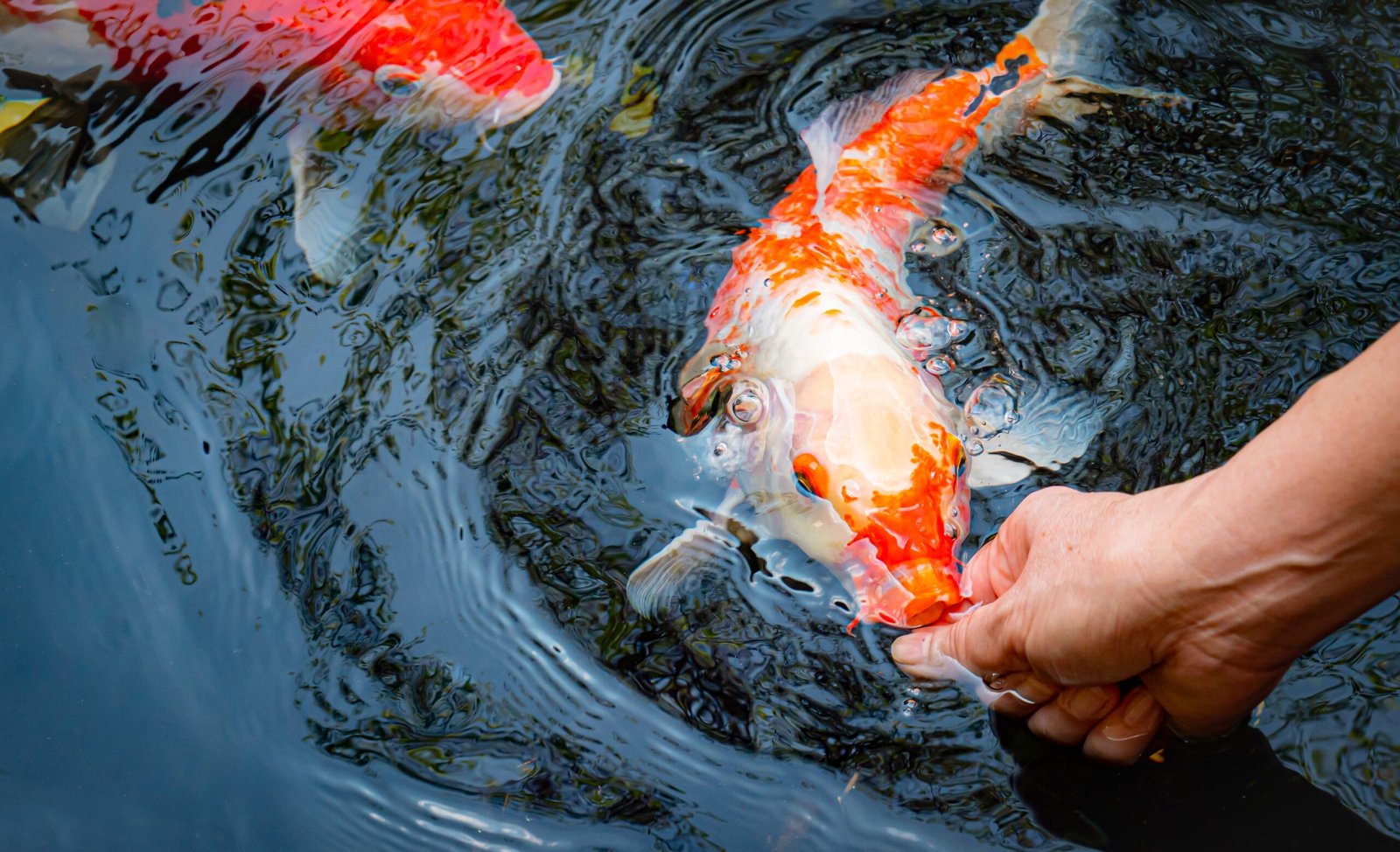
Koi variety lingo

Koi Lingo
Understanding the Language of Koi
One of the many challenges of keeping koi — aside from maintaining their health — is understanding and pronouncing their Japanese names. Each koi variety has a specific name that describes its colouration and pattern. By learning a few key Japanese words and understanding how “koi lingo” works, you can communicate far more confidently with other enthusiasts.
Japanese is a logical language, and koi terminology is built in a structured way. A core word describes the base variety, and additional words are added to refine colour, pattern or special features. Once you learn a handful of terms — and how to pronounce them — you will notice they are used repeatedly across different varieties. This makes it much easier to understand what fish others are referring to and to describe your own koi accurately.
Koi terminology can broadly be divided into three categories:
-
Names of specific varieties
-
Descriptive prefixes that modify those varieties
-
Additional terms describing quality, age or special features
1. Names of Specific Varieties
It is helpful to become familiar with the most widely kept varieties so you can recognise them when discussed.
The elite group of koi varieties is known collectively as the Go Sanke. These include:
-
Kohaku – a white fish with a red pattern
-
Taisho Sanke (often shortened to Sanke) – a white fish with red and black patterning
-
Showa – a predominantly black fish with red and white patterning
Other varieties featuring black patterning include:
-
Bekko – black markings on a coloured base
-
Utsuri – a black base with a single contrasting colour
One particularly impressive and popular variety is the Shusui, a blue and orange koi characterised by a row of large mirror scales along its back.
Metallic varieties are also highly prized. Single-coloured metallic koi are known as Ogon. For example:
-
Yamabuki Ogon – metallic yellow
-
Purachina Ogon – metallic white or platinum
More complex metallic patterns include:
-
Hariwake – metallic white base with yellow or orange pattern
-
Kujaku – often described as a metallic Kohaku with reticulated patterning
2. Descriptive Terms That Modify Varieties
Japanese prefixes are used to add further detail, particularly colour.
Common colour terms include:
-
Aka, Beni or Hi – red
-
Orenji – orange
-
Ai – blue
-
Sumi – black
-
Ki – yellow
-
Kin – gold
-
Gin – silver or metallic
Using these prefixes:
-
Ki Bekko – yellow koi with black markings
-
Ki Utsuri – black koi with yellow markings
-
Hi Utsuri – black koi with red markings
The same logic applies to other varieties:
-
Hi Showa – Showa with heavy red patterning
-
Kin Showa – metallic Showa
Pattern descriptors are also used:
-
Kindai Showa – Showa with a predominance of white
-
Tancho – only red marking is a single spot on the head
-
Maruten – a head spot plus additional red elsewhere on the body
Scale types also influence naming:
-
Doitsu – partially scaleless koi with large mirror scales along the dorsal and lateral lines (originating from German carp)
-
Ginrin (Kinginrin) – koi with sparkling, glitter-like reflective scales
For example:
-
Doitsu Sanke – scaleless Sanke with mirror scales
-
Ginrin Kohaku – Kohaku with sparkling scales
3. Additional Terms Describing Features
Beyond variety and colour, other Japanese words describe quality and characteristics.
Kiwa refers to the sharpness of the edge between colours. The cleaner and more defined the boundary, the higher the quality.
Shimi describes undesirable small black specks that can appear on a koi, often with age, disrupting the pattern.
Tategoi refers to a young koi whose true potential has not yet fully developed. These fish are selected for their future promise and are often valued according to expected improvement.
Speaking the Language of Koi
By learning even a small selection of these terms, you can describe koi more precisely and understand discussions among other keepers with greater confidence. The structured nature of Japanese koi terminology makes it surprisingly logical once the basic building blocks are understood.
Mastering a little “koi lingo” is not just helpful — for the serious enthusiast, it is part of the enjoyment of the hobby.