Koi Food Types

Koi Food Types.
Fried, scrambled, poached, or boiled (soft or hard). Eggs are such a convenient, tasty and versatile food that we can choose to cook them in one of many ways. And whatever form we choose to accompany our bacon, their nutritional content will largely be unaffected.
To some degree, the same can be said of koi foods. We can choose to feed our koi a number of different types of artificial koi food and yet all types can contain the same ingredients. In earlier articles in this series, we have concentrated on the ingredients and formulations used to provide koi with the nutrition they require. We have seen how the objectives of achieving health, growth and colour can be achieved by the selective formulation of a range of functional koi diets. We now turn our attention to the final link in the chain which is to ensure that the precisely formulated diet is made available for koi in a form that they can easily digest and assimilate. In doing so, our focus is switched from being concerned about the nutritional (or internal) details of the food to its external and physical attributes.
Having spent considerable time and expense researching the nutritional requirements of koi and their response to specific diets, a lot of this groundwork can be wasted if the food is not offered to the pond (and koi) in the most suitable form.
In the previous article, for instance, we saw how water soluble nutrients can leach out of foods as soon as they come into contact with water. Fish nutritionists, are aware of this and address the problem so that our koi do not receive a deficient diet. Consequently, the physical form of a koi food is of prime importance as it can have a profound effect on this and many other associated koi health factors.
Artificial diets can take many different physical forms and shapes with each type affecting its performance as a koi food. Artificial diets offer many advantages to the koi keeper and to a degree have become taken for granted as a reliable tool in the hobby. Yet without artificial koi diets, it would not be possible to keep koi in unnatural and heavily stocked ponds.
The benefits of an artificial diet.
1. Flexibility of Formulation.
Unlike being constrained by the limitations of a natural diet, artificial diets can be tailored to meet any nutritional need. By manipulating the formulation and ingredients (which we are able to source from all over the world) it is possible to formulate an infinite number of diets. We can formulate for colour, growth, include additives to enhance health and even add medication to the food.
2. Precision Formulations.
Unlike many natural diets whose quality is likely to fluctuate through the seasons and from year to year, artificial diets can be guaranteed to deliver precise nutrition throughout the year. They remove any unpredictability from the diet your koi are likely to receive.
3. Improved digestion and assimilation.
Artificial koi diets can be compared to baby foods. They are highly processed, being finely milled and cooked, making them far more palatable and digestible than a raw and natural diet. Better utilisation of the diet by koi will lead to less waste being produced and better water quality.
4. Easier Feeding
Although koi are bottom feeding fish, they can soon adapt to a floating pellet. This allows us to ensure that our ponds are not overfed and if ever too much food is offered, that it can be easily removed. Furthermore, a range of pellet sizes means that a range of mouth sizes can be catered for, ensuring that each mouthful contains a complete diet.
5. Long Shelf-life and Easily Handled
The dry nature of artificial diets makes pelleted diets easy to handle and store. Imagine having to locate, store and feed daphnia or even maggots on a daily basis. They would soon deteriorate and prove difficult if not impossible to store long-term (and would not offer your koi complete nutrition). Dry artificial diets have a long shelf life (at least 12 months) and offer us unrivalled convenience.
Which Type of Koi Food Should You Choose?
When selecting the best koi food for your pond, it helps to understand that most diets fall into three distinct categories:
-
Floating pellets and pond sticks
-
Sinking pellets
-
Paste foods
Each format influences feeding behaviour, nutrient stability and water quality in different ways. Choosing the right type of koi food isn’t just about convenience — it directly affects how effectively your fish receive their nutrition.
Floating Pellets and Pond Sticks
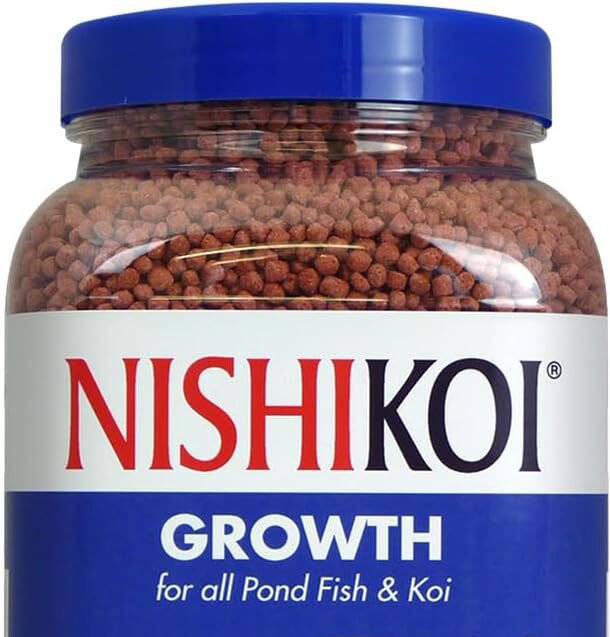
Floating koi pellets are manufactured using an extrusion process. During production, finely ground ingredients are blended and heated into a soft paste. This mixture is then forced through precision dies under pressure. As it exits, it expands and traps air within its structure. These microscopic air pockets reduce density, allowing the pellet to float.
If the cutting blades operate less frequently, the same extrusion process produces longer floating sticks rather than compact pellets.
Why Floating Koi Food Is So Popular
For many keepers, floating pellets form the foundation of a koi feeding regime. Their advantages are practical as well as nutritional:
-
Reduced nutrient leaching – Their dense outer structure limits water absorption when eaten promptly.
-
Improved diet delivery – Koi consume a complete nutrient package before breakdown occurs.
-
Easy health monitoring – Surface feeding allows you to observe appetite and behaviour.
-
Early problem detection – A fish that doesn’t rise to feed may be signalling illness.
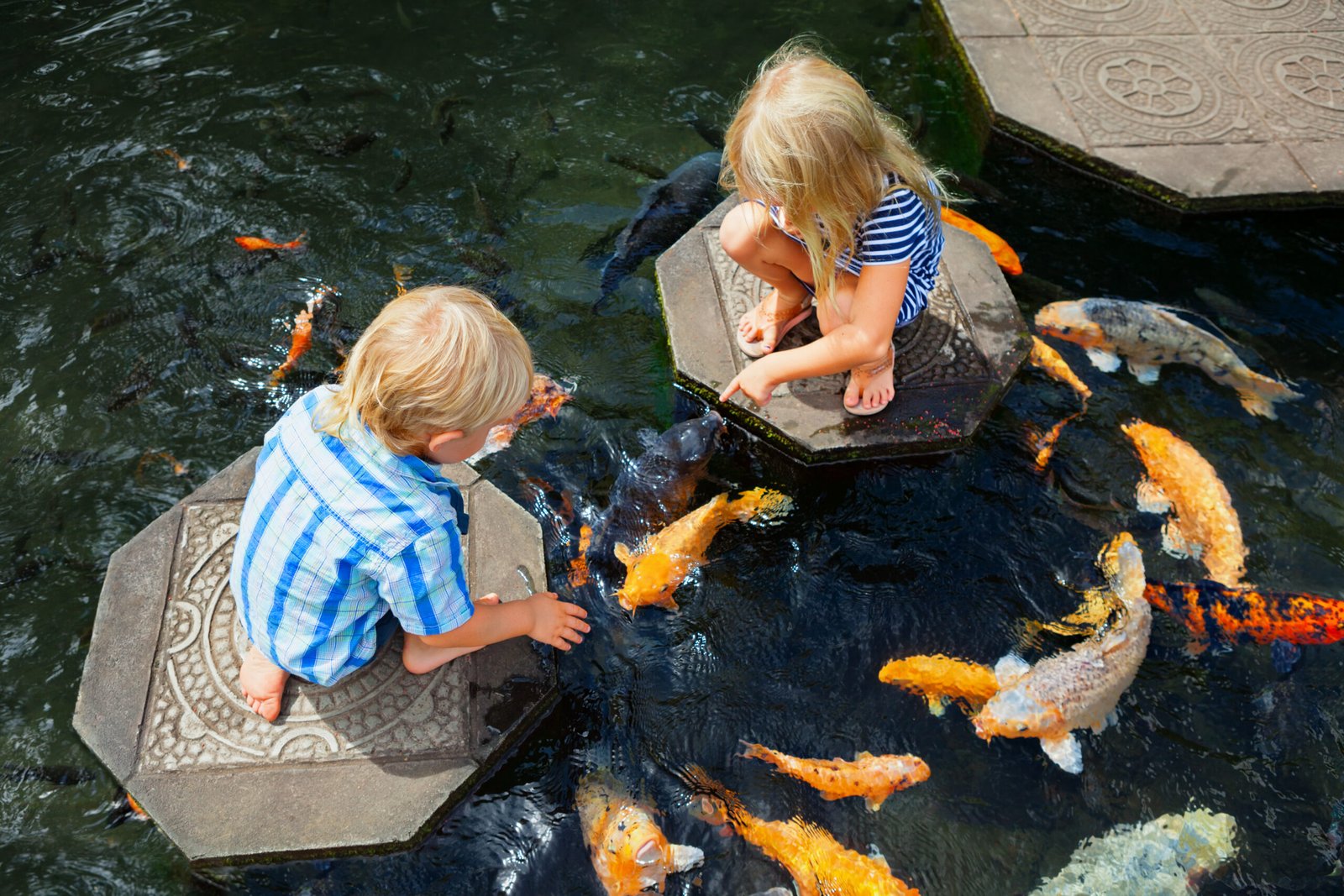
Floating koi food also enhances the enjoyment of koi keeping. Bringing fish to the surface allows interaction and close inspection — something not possible with a purely sinking diet.
Sinking Pellets
Sinking pellets are created using a similar extrusion method but without allowing expansion. Because air is not incorporated into the pellet, it remains dense and sinks once introduced into the pond.
Advantages and Considerations
Sinking koi food allows fish to feed lower in the water column or from the pond floor, encouraging more natural feeding patterns. However, there are management considerations:
-
Uneaten food can be difficult to detect.
-
Excess pellets may affect water quality.
-
You lose the opportunity to visually confirm that every koi is feeding.
Despite these drawbacks, sinking pellets can be particularly useful in spring. As water temperatures rise after winter, koi metabolism remains sluggish. Offering a small amount of sinking food can encourage hesitant feeders to resume eating.
Used strategically, sinking pellets can complement — rather than replace — floating diets.
Paste Foods
Paste koi food differs significantly from pellet-based diets. The finely milled ingredients are supplied before extrusion and must be mixed with water to create a firm dough. This dough is then offered in small portions.
Once in the pond, paste behaves as a sinking diet. However, because of its soft texture and fine particle size, it immediately releases soluble attractants into the water. Koi have an extremely sensitive sense of smell, and this rapid scent dispersion often triggers intense feeding activity.
Benefits of Paste Koi Food
-
Highly palatable and attractive
-
Soft and moist texture
-
Excellent for stimulating appetite
-
Encourages strong feeding responses
Things to Be Aware Of
Paste food doubles in weight once mixed with water, so portion control is important. Temporary water clouding can occur during feeding, although a properly sized filtration system should manage this without issue.
Because paste contains finely milled particles, nutrient leaching can occur more rapidly than with pellets. For this reason, high-quality formulation is essential to ensure koi receive balanced nutrition.
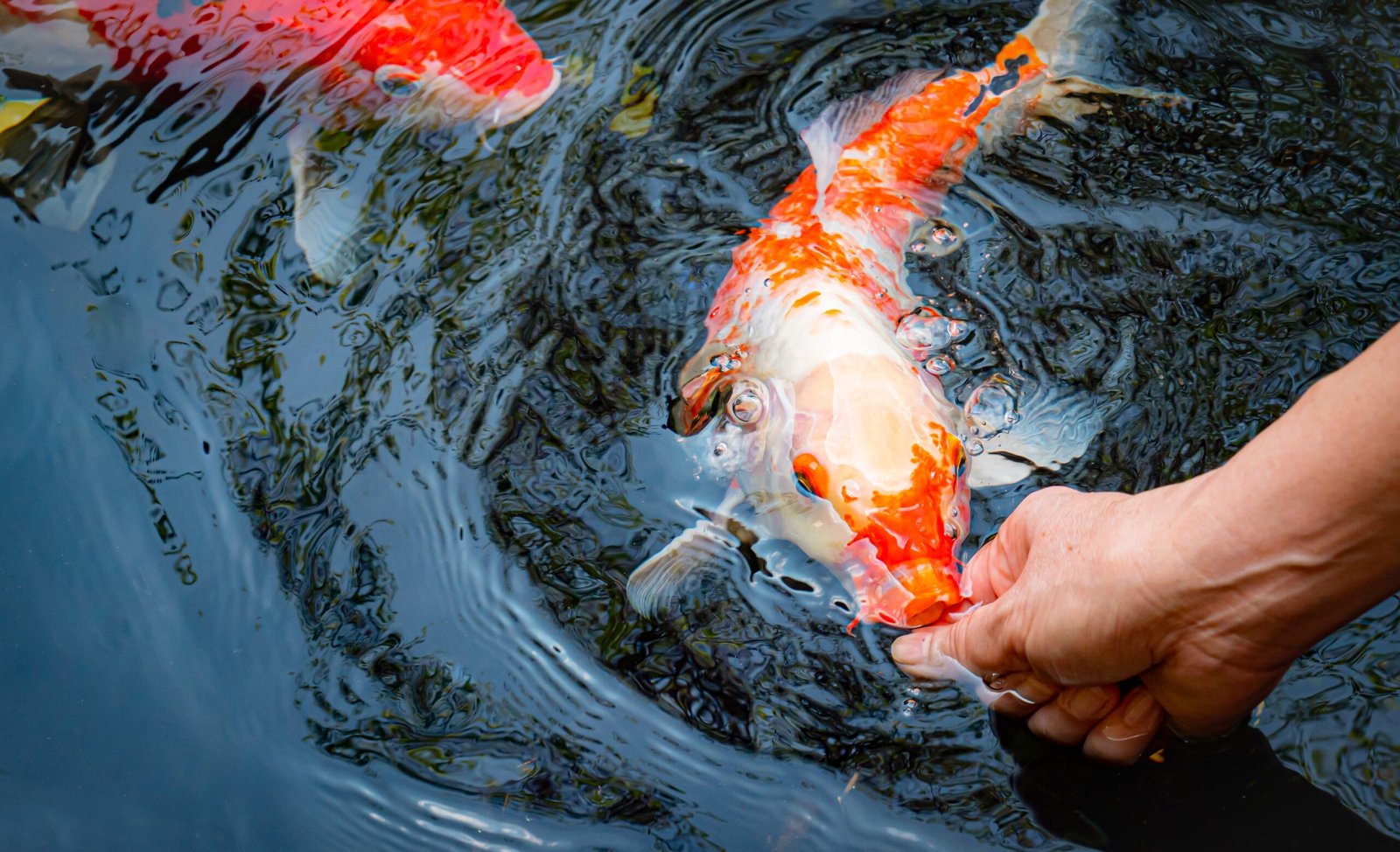
That said, paste feeding can be extremely rewarding. Hand-feeding dough balls often results in enthusiastic, close-contact feeding — something many koi keepers thoroughly enjoy.
Floating, Sinking or Paste — What’s Best?
There is no universal “best” koi food type. The right choice depends on:
-
Season
-
Water temperature
-
Pond design
-
Fish behaviour
-
Your management style
For most ponds, floating pellets remain the safest and most controllable option. Sinking pellets and paste foods can then be used strategically to stimulate appetite, support seasonal transitions or add variety.
A balanced feeding strategy — rather than reliance on a single format — is often the hallmark of experienced koi keeping.
Due to the issue of leaching caused by the fine nature of the paste flour, there is a risk of koi receiving a deficient diet unless precautions are taken during formulation. Nevertheless, it is great fun to mix and feed koi a paste food.
In summary, having satisfied yourself that you know what to look for in a diet and the nutrition you feel is best for your koi, consideration should also be given to the type of food that you choose to act as a vehicle for feeding that diet to the koi. Pellets (floating and sinking) and paste foods each have their benefits for you and your koi with the final choice of format down to your preferences and requirements.