Heating a winter pond

Should I heat my new pond this winter?
Dear Ben,
I know it is not quite autumn yet, but as a very new koi keeper I am trying to be extra careful and think well ahead of myself. My husband completed our koi pond in March this year, and we have enjoyed our three dearly loved koi throughout the summer months. However, I have heard conflicting opinions on how to adapt to the winter months, and am concerned that I might do something wrong that will endanger our koi. If you could give me some advice now on heating the pond, filtration, and any other pieces of equipment that may need altering, I will be able to prepare myself for when winter hits us. Thank you very much for a great magazine.
Your overwintering strategy will depend on specific aspects of your pond (such as depth) as well as what you are looking to achieve with your koi over winter. I’d love to be having this conversation with you standing next to your pond so we can see exactly what you’ll need to do (if anything) to take your koi safely through to next spring. However, this isn’t possible, so where necessary, I’ll have to make some assumptions that I hope will be accurate.
What’s best for your koi?
We mustn’t forget that koi are a warm water fish and are tolerant of a wide range of temperatures – making them an ideal pond fish. Don’t presume that koi cannot over winter at ambient temperatures as the majority of koi in the UK do so satisfactorily each year without any human intervention. In fact, a koi’s physiology is geared to overwintering. The shortening daylength as winter approaches causes koi to prepare for winter before it arrives, feeding in excess (whenever possible) to store sufficient energy to survive the winter. The onset of cold weather may come as a shock to us, but our koi, unbeknown to us, will have been preparing for this testing period for months.
As soon as the water temperature drops below 8oC, koi become relatively inactive, drop to the bottom of the pond, not to feed again until the temperature rises above 8oC in the spring. It is the length of period for which koi are inactive that we do not have control over and we have to accept the winter that materialises unless you choose to intervene.
Aren’t inactive koi at risk from disease over winter?
You are unlikely to witness diseased or unhealthy fish during cold and icebound conditions but any problems that do occur are more likely to manifest themselves in the spring when water temperatures and disease populations can explode ahead of the koi’s ability to fight them.
What about heating?
Your interest in heating your pond over winter is one strategy that will give you control over the length and depth of winter. It will also help you control your pond temperature as spring approaches, helping you to bring your koi out of their period of inactivity predictably, returning them eventually to normal summer temperatures. If you are looking at heating you pond, then I assume it is 4′ deep or less because any deeper and your koi should be able to over winter satisfactorily.
But before going ahead with heating, there are certain factors that you should take into consideration before and during heating your pond. Heating certainly does provide you and your koi with tangible benefits, but you should be cautious if choosing to use it in certain ways.
The Benefits of Heating
Heating a koi pond offers several important advantages, particularly during colder months when water temperatures fluctuate and fish are under increased stress.
1. Complete Temperature Control
Heating allows total control over the water temperature your koi are exposed to, even during the harshest winters. Rather than leaving your fish vulnerable to prolonged cold spells, you can maintain a stable and safe environment throughout the year.
2. Protection from Sudden Temperature Swings
One of the greatest risks to koi is not steady cold, but sudden and unpredictable temperature fluctuations during autumn and spring. Heating smooths out these sharp transitions, protecting koi from stress caused by rapid change.
Unlike the natural world, where only the fittest survive, ornamental koi have been selectively bred for beauty rather than resilience. Subjecting them to extreme seasonal stress is rarely desirable in a managed pond environment.
3. Improved Immune Function
Maintaining some level of activity through winter helps support the koi’s immune system. When fish remain metabolically active, their ability to resist disease improves. Extremely cold water suppresses immune response, leaving fish more vulnerable to infections and parasites.
4. Continuous Filter Performance
Heating prevents your biofilter from entering a prolonged dormant phase. Beneficial bacteria slow dramatically in cold water, and a fully inactive filter may require careful re-establishment in spring.
By maintaining moderate temperatures, the biological filter continues functioning, reducing the risk of water quality problems when feeding resumes.
The Costs and Considerations
While the benefits are significant, heating also introduces certain drawbacks that should be carefully considered.
1. Disruption of Natural Rhythms
If water temperature is managed inconsistently, you may interfere with the koi’s natural biological rhythms. Seasonal temperature cycles influence spawning behaviour, and poorly managed heating can disrupt breeding patterns in the following year.
2. No Natural Fallow Period
In an unheated pond, winter provides a natural fallow period. Parasites and pathogens slow down significantly in cold conditions. When water is heated and fish remain active, parasites also remain active, potentially increasing disease pressure throughout the year.
3. Financial Cost
Heating involves both capital and running expenses. There is the upfront investment in equipment and installation, followed by ongoing energy costs. These must be weighed carefully against the benefits of temperature control and improved fish health.
Electric Heating – The Simplest Option
(Assuming your pond is no greater than 3,000 gallons.)
Electric heating is generally the simplest solution for small to medium-sized ponds.
To avoid releasing potentially harmful metals into the water, choose a heater specifically manufactured for koi ponds. These units are constructed from chemically stable materials designed for aquatic use.
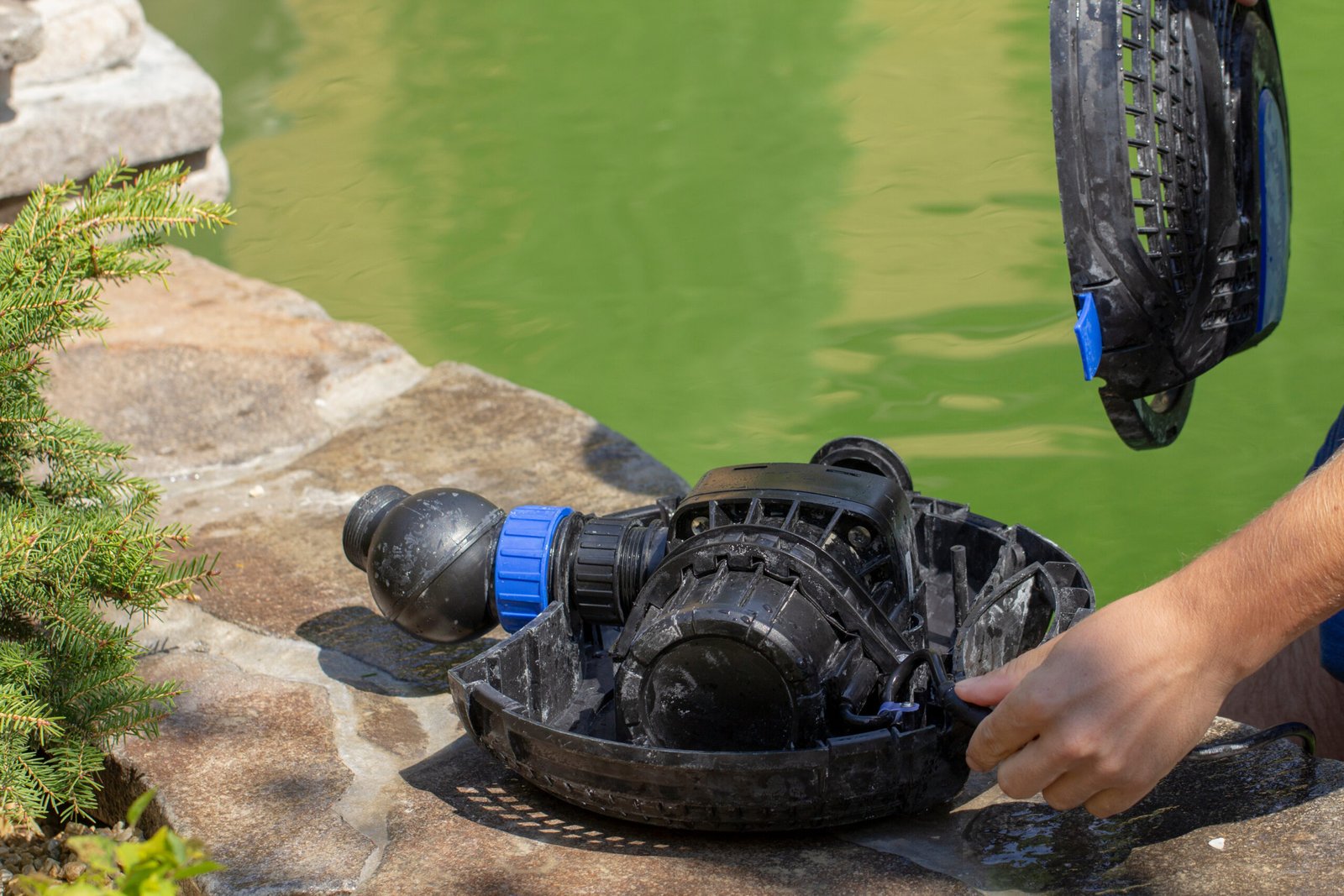
Most electric pond heaters are installed inline between the pond pump and the return pipework, in much the same way as a UV clarifier. It is important that water flows through the heater at the correct rate to ensure efficient operation.
Heater size is determined by pond volume. A useful rule of thumb is:
-
One kilowatt (1 kW) of heating power for every 1,000 gallons of water.
For example:
-
1,000 gallons = 1 kW
-
2,000 gallons = 2 kW
-
3,000 gallons = 3 kW
Heaters rated up to 3 kW can usually be plugged into a standard mains supply, provided they are protected by an RCD or RCBO (residual current safety device).
Heaters above 3 kW will generally require direct wiring into your home’s consumer unit (fuse box) and should be installed by a qualified electrician.
With careful planning and realistic expectations regarding costs, electric heating provides a straightforward and effective method of maintaining stable winter pond temperatures.
What about filtration over winter?
In winter with no food entering the pond, ammonia and nitrites are not likely to reach toxic levels. DO is not an issue either as the metabolism of those organisms consuming oxygen will de depressed. However, pH can be a cause for concern and should be monitored, particularly in the early spring during the thaw. But if you do decide to heat your pond, you will have to continue filtering as before.
You can choose to use your heater to provide either summer temperatures through the winter months or to simply remove the harshness of the winter by providing your koi with a steady 10C (or so) all winter.
A strange thing happens to a koi’s physiology during a temperate winter wherein when the day length shortens in winter, so does a koi’s ability to grow. This is caused by a reduction in the secretion of a growth hormone, meaning that in effect, even if your koi feed over winter they will not grow – (they may put on weight, but they will not put on a significant increase in length). So by providing your koi with a summer climate all year round, you will not experience similar summer growth rates (and yet you will be experiencing very high running costs, and higher food costs throughout the colder months.
An alternative, cheaper strategy is to keep your pond at 10C. At this temperature, your koi could still be offered a maintenance ration of a low protein diet, enabling them to feed and your filter to still function over winter. From speaking to koi keepers across the country on this topic, this appears to be the most common strategy adopted by those who heat their ponds over winter. By reducing the temperature for that lengthy winter period, you also reduce the threat of disease from bacteria and parasites (as their numbers will decline naturally) while your koi’s immune system will still enjoy a degree of activity. It also provides your koi and pond with some sense of season, even though the temperature differential is produced artificially.