Pond protein skimmers

Pond protein skimmers. How pond equipment works.
The koi keeping hobby must be like many other hobbies in that each year it is a testing bed for new products and innovations. Many are launched overnight and appear to leave the hobby just as quickly. Others are launched as adaptations from other markets or industries, with some still failing but others becoming embedded in the hobby. This happened with UVcs 15-20 years ago, and I believe it has started to happen with pond foam fractionator over the last 5 years.
Why have pond protein skimmers started to catch on?
1. Tried and trusted technology.
Those of us who have a grounding across the aquatics world will be well aware of the widespread use of protein skimmers in marine aquatics. The principle was harnessed and applied to marine systems as long ago as the mid-1960s, and foam separation techniques have been used since at least the 1890s in broader industry contexts. Protein skimmers add a lot to the marinists’ toolkit for maintaining stable water quality (as unlike ornamental pond fish, most marine fish cannot tolerate even the slightest of changes to their environment) and perhaps have been overlooked as a possible tool for the pond keeper.
2. They perform several very beneficial roles.
a. Better water quality. Until the development and introduction of pond foam fractionators, we have relied on conventional filtration (backed up by regular partial water changes) to provide us with our best pond conditions. Even though this produced (and continues to produce) excellent results, it does so on a reactive basis. That is, it processes a combination of organic and inorganic compounds within the pond to form less toxic by-products, which regrettably still remain within the pond. Protein skimmers work proactively, intercepting and removing dissolved organic compounds as they are produced, before (and after) a filter has processed them, relieving the filter of a considerable work load. Furthermore, a protein skimmer physically removes the dissolved organic matter from a pond, never to enter the pond again.
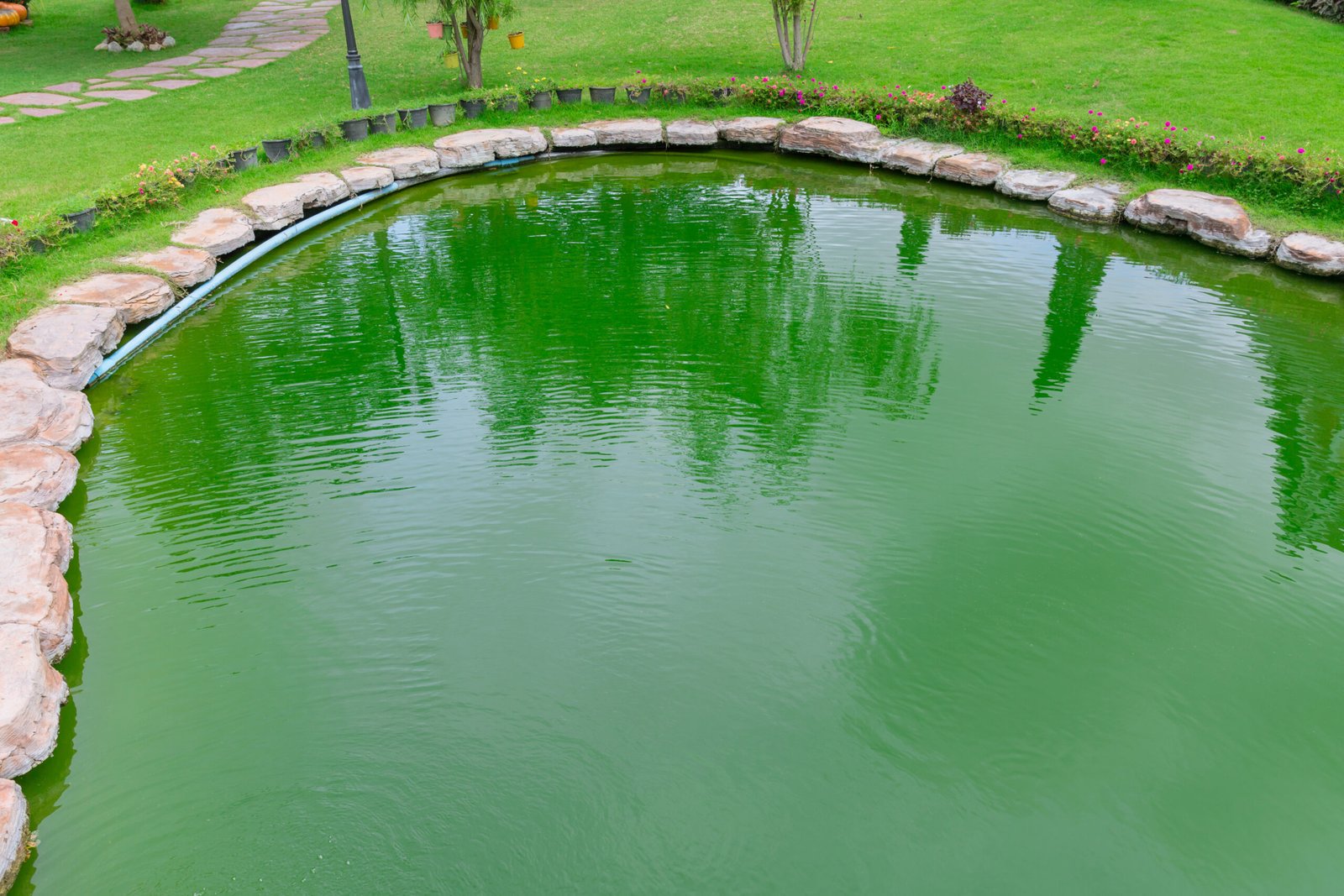
b. Improved visibility. The accumulation of dissolved organic compounds results from the addition of food, the products of fish digestion and the random addition of organic matter from outside the pond. This can very gradually cause the appearance of the pond water to deteriorate from being colourless (just as it was when it left the tap) to becoming tinged with a yellow/brown tea-like appearance. Traditionally, we have kept on top of this unwelcome phenomenon of an ageing pond by carrying out regular partial water changes, diluting the shading effects of DOC (again on a reactive basis). But the installation of a protein skimmer that will work constantly to remove even the smallest traces of DOC as and when it is released into the pond, will prevent any DOC from accumulating. This regular removal of nutrients from the pond also has the added benefit of reducing the likelihood of nuisance algae from thriving.
3. Easy to install.
I am convinced that one of the key factors behind the UVc’s success has been it’s ease of installation. I suggest that this is also likely to be the case with pond protein skimmers. Just like a UVc, a skimmer can be run via a bleed from the main pond system or from their own dedicated pump supply (the preferred option when venturi-driven units are in operation). One potential area of maintenance though is the need to regularly clean/remove the collected proteinaceous soup. Fortunately , as the units are garden-based, they can drain themselves; a feature I wish I’d had on an old protein skimmer I used to use for a marine aquarium!
What is protein skimming?
Firstly, I’d like to introduce a new term to describe more accurately the process of ‘protein skimming’ as this term suggests that only proteins are removed, underselling the skimmer’s ability to remove a host of dissolved organic and inorganic compounds. Consequently ‘foam separation’ is a more accurate term as the unit removes the foam from a pond taking with it a host of compounds that will include: amino acids, organic dyes, fatty acids, carbohydrates, enzymes, detergents and many inorganic compounds such as metal ions that may leave being linked to other compounds.
Protein Skimming and Foam Fractionation Explained
Protein skimming works by a process known as adsorption (not absorption). Adsorption is the attraction of dissolved organic compounds (DOCs) onto a surface — in this case, the surface of air bubbles.
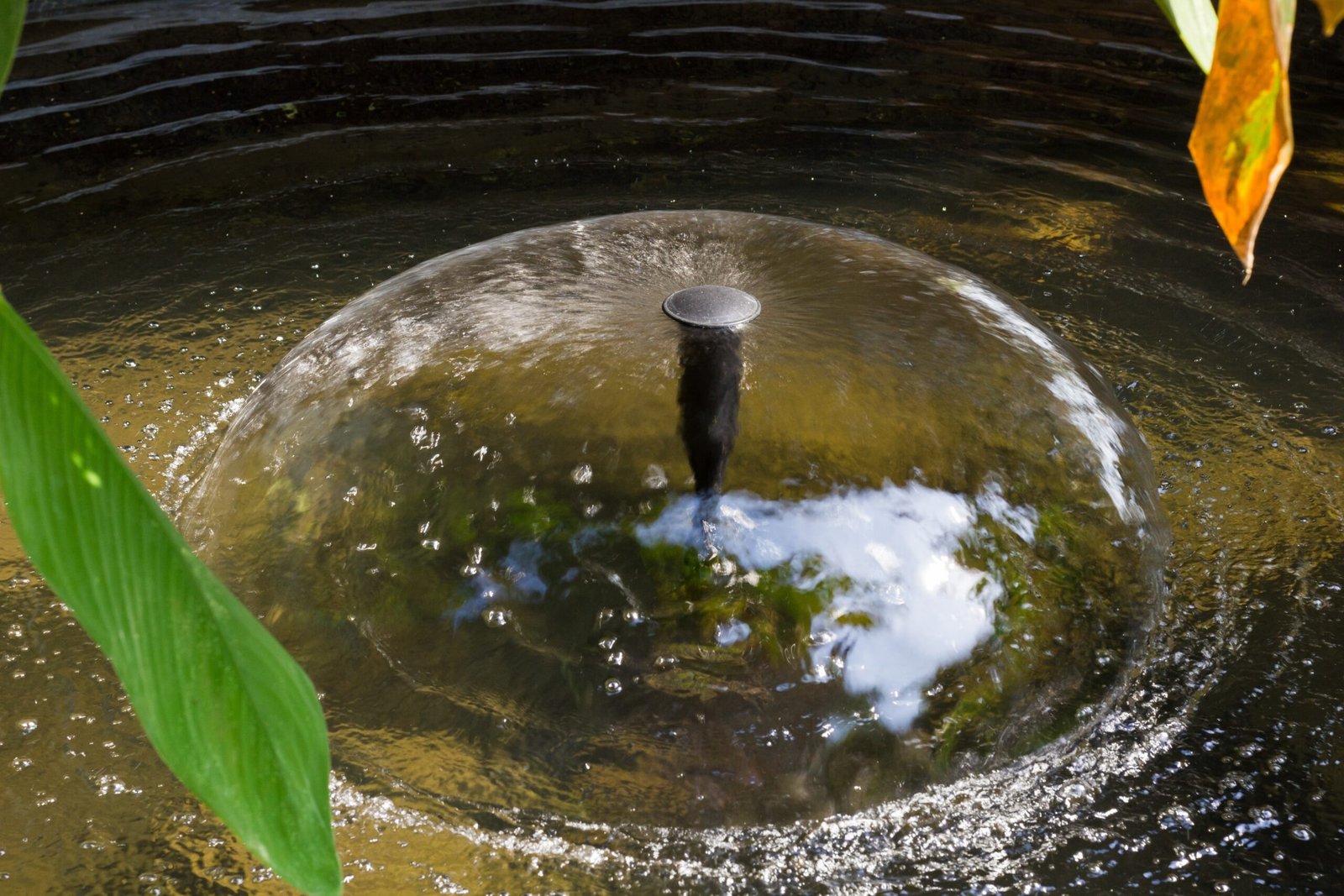
DOC molecules are partly responsible for foam forming on pond surfaces. If you’ve ever seen persistent foam collecting along the edge of your pond, you’ve already witnessed this process in action. DOC molecules stabilise bubbles, allowing them to remain intact and accumulate into visible foam — a clear sign that DOC levels are elevated.
The “Matchstick” Molecule
To understand how this works, imagine each DOC molecule shaped like a matchstick with a dual personality:
-
The “head” is hydrophilic (water-loving) and prefers to stay immersed in water.
-
The “tail” is hydrophobic (water-repelling) and tries to avoid contact with water.
When a bubble forms, these bipolar molecules immediately migrate to the air–water interface. They align themselves so that their hydrophilic heads remain in the water while their hydrophobic tails point toward the air inside the bubble. This alignment stabilises the bubble and prevents it from bursting quickly.
The more DOC present, the more stable bubbles form — and the more persistent the foam.
How Foam Fractionation Works
Foam fractionation (protein skimming) deliberately exploits this behaviour.
A protein skimmer produces a dense cloud of very fine bubbles. This massively increases the available air–water surface area, encouraging DOC molecules to attach themselves to the bubbles. As the bubbles rise, they form a thick, stable foam that collects at the top of the chamber.
The foam then overflows into a collection cup or waste outlet. What remains after the foam collapses is a concentrated brown liquid — essentially the removed dissolved organic waste.
What to Expect When Installing a Skimmer
When first installed on a pond with elevated DOC levels, a foam fractionator can produce surprisingly large volumes of foam and dark liquid. This initial surge occurs because the system is rapidly removing accumulated organic compounds.
Over time, as DOC levels drop:
-
Foam production decreases
-
The liquid removed becomes lighter
-
The system stabilises
When operated continuously, a protein skimmer prevents DOC from building up again, helping to maintain:
-
Improved water clarity
-
Reduced surface foam
-
Lower organic load
-
Improved oxygen exchange
-
More stable overall water quality
In essence, foam fractionation is a highly effective polishing tool — particularly valuable in heavily stocked koi ponds where dissolved organics can accumulate quickly.
How a pond protein skimmer works.
A pond protein skimmer is designed to perform two functions:
1. The formation of bubbles from pond water
2. The collection (and removal) of the foam from the pond
There are several different designs of protein skimmer available to the pond keeper, all of which work on the same basic principle of mixing lots of air with pond water, and allowing the natural physico-chemical interactions to take place. Where a venturi is used as the means of injecting air. It’s performance will be enhanced by providing a greater pressure difference between the pumped water and the atmosphere, benefiting greatly from a dedicated pump supply from a sizable pump (i.e. a 5m head).
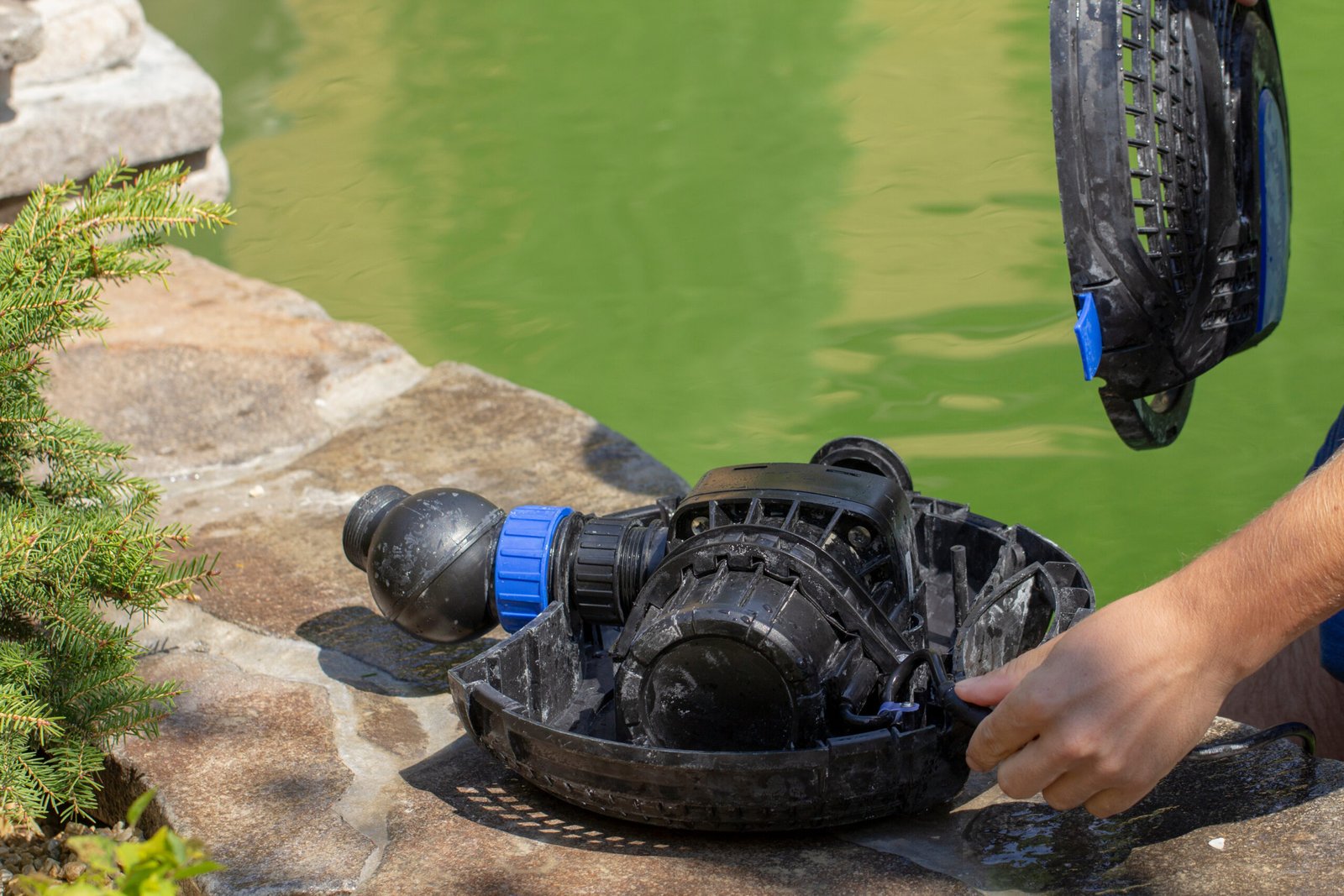
The venturi will be adjustable, so that maximum bubble (and foam) generation can be achieved. The key to the success of a foam fractionator is to be able to form and collect the stable bubbles before they are able to burst. One of the more popular pond protein skimmers uses an inverted funnel whose channel is cunningly subdivided into tubes that run vertically towards the foam collection point. The diameter of these open ended tubes encourages the bubbles to remain intact until they reach a discharge pipe through which the skimmed concentrate will trickle into the collection cup and then out of the unit into a suitable vessel. It’s nutrient-rich characteristics make it an ideal fertiliser for your lawn or garden.
The quantity of discharge can be controlled, and you will notice that the rate and quality of discharge will vary depending on the state of your pond. You may even see daily peaks and troughs of discharge either side of feeding.
Ozone?
Marinists soon discovered that the performance of a skimmer could be improved through the addition of ozone (O3) instead of air. Ozone is very unstable and requires an ozone generator to produce it at the point of use. The highly oxidative properties of ozone also rapidly detoxifies a wide range of organic compounds that enter a protein skimmer. However, great care must be taken to ensure that ozone does not enter the pond as it will indiscriminately oxidises desirable organic matter in the pond, such as beneficial bacteria and even fish tissue.
Factors that affect protein skimmer performance.
1. Bubble size. The smaller the better. (optimum is approximately 0.8 mm in diameter which is achievable in a marine aquarium, but rarely in a pond as the water is it less dense). Bubble size and venturi performance improves when water pressure increases. This has to be balanced with the need for a lengthy contact time between air and water(see next point).
2. Contact time between bubbles and water. The longer the bubbles are in contact with pond water, the more organic compounds will be attracted to the air/water interface, stabilising the bubble and ultimately removing the contaminants from the pond.
3. Temperature. Foam breaks quicker at higher temperatures, which can mean that foam is less stable at high summer temperatures leading to a potential drop in the performance of a protein skimmer.
3. pH. Interestingly, it has been shown that the physico-chemical properties that act on the organic compounds at the bubble interface work more effectively for foam production at high pH. eg Protein skimming is better at a pH of 8.5 compared to a pH of 7.5.
4. Ozone. Ozone can improve the efficiency and effectiveness of protein removal.
5. Protein concentration. The higher the concentration of DOC in a pond, the better the foam production and removal. Once protein levels have been reduced by the continuous use of a skimmer, foam formation may be hindered by the low levels of DOC.
6. Design and construction of foam chamber. This will determine how readily and stable the formation of bubbles will be.
In summary, foam separation is a useful way of supporting and improving the performance of your existing filter, leading to better water quality and water colour. Even though the impact of its installation on a pond is less tangible than a UVc, they are just as straightforward to install and will benefit your pond without the need of any chemicals (or the risk of over dosing). They simply harness the same physico-chemical interactions that occur naturally in your pond to form a foam on your pond’s surface, but do it out of sight and far more productively so that your pond’s surface will foam no more. Why not see for yourself how straightforward they are to install and be amazed (and even disgusted) by the quantities of thick, brown, proteinaceous broth your pond is willing to give up.