Koi, pond fish digestion

The Journey of Digestion.
Koi eat to live (except Chagoi that obviously live to eat!) and a koi’s physiology is adapted to be able to consume and digest a vast array of living and dead food materials. The processed and manufactured artificial diets that are routinely offered to koi bear little resemblance to the nature and diversity of the food that this opportunistic omnivore is actually adapted to digest. – Put briefly, when considering digestion, captive-reared koi are the spoilt relatives of their ancestral carp. However, even though koi have improved on the drab carp livery, they have retained the digestive capabilities of a carp and as we will see, because of their rough-n-ready natural diet, they have an ability to digest a vast array of natural food items.
What is digestion?
When koi feed, their objective is to digest the food they consume efficiently, absorbing what they require, excreting what is indigestible or surplus to their requirements. Digestion is the breakdown of insoluble food items into less complex, soluble molecules that koi can then absorb into their blood. This involves both mechanical (physical) and chemical stages, and the feeding process starts before food is offered to them as koi are likely to detect you approaching the pond with food.
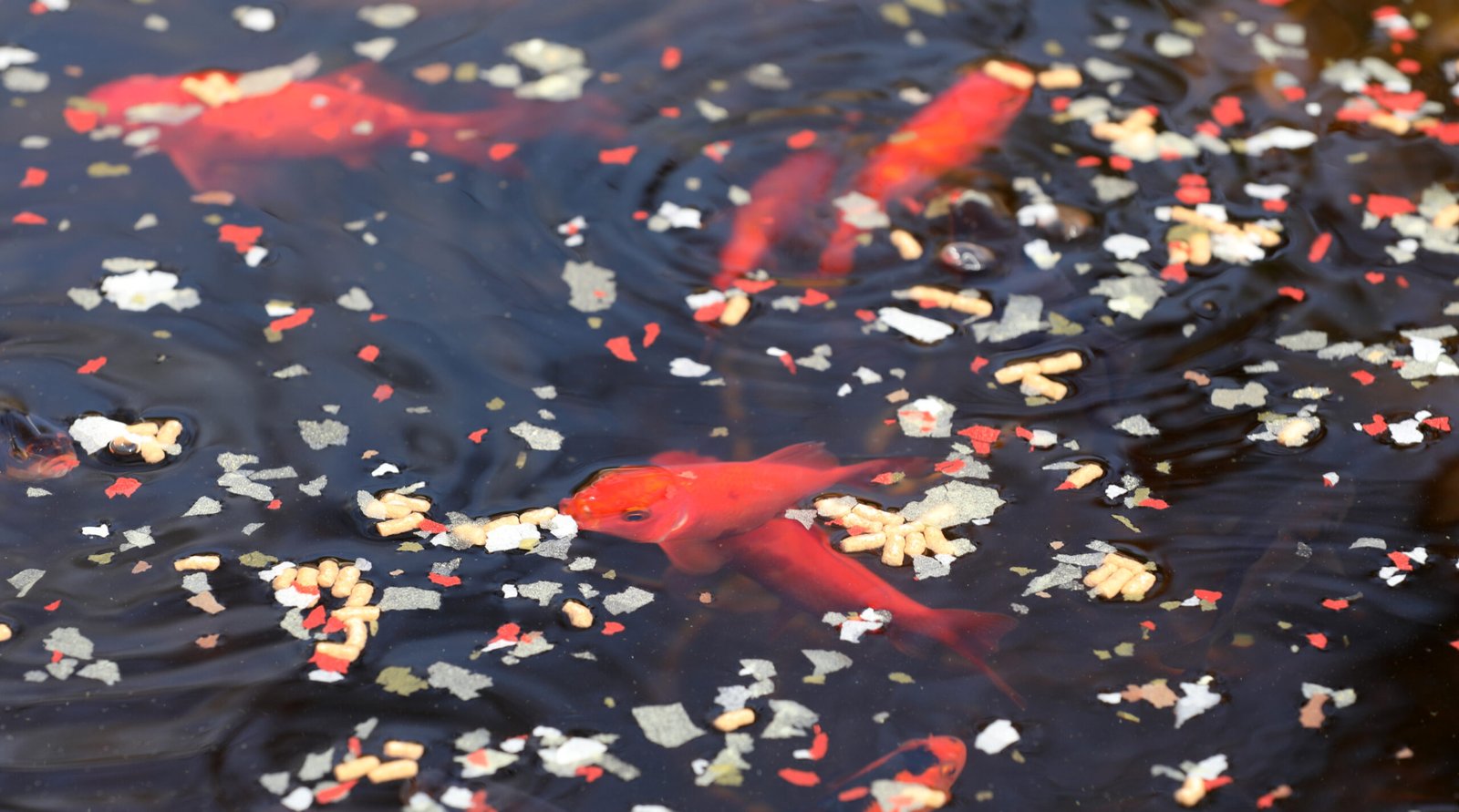
Koi are alerted to the presence of food through a combination of sight, sound and smell, as they either see or hear food (or other feeding koi), or smell the scent of food that has dissolved in the water.
If you’ve ever watched koi feeding closely, you’ll notice there’s far more going on than simple gulping. The koi digestive system is highly specialised, perfectly adapted to an omnivorous grazing lifestyle — and understanding how it works can help you optimise feeding, growth and water quality in your pond.
The Mouth and Buccal Cavity – Food Selection Begins
When a koi discovers food, its mouth and buccal cavity (the rear chamber of the mouth) immediately go to work. This area is designed for seizing, sorting and preparing food before it enters the gut.
The buccal cavity is lined with tough folds of tissue known as mucosa. This membrane contains microscopic projections called papillae, along with mucus-secreting goblet cells and numerous taste buds. These structures help koi detect, select and control food particles — which explains why they often take food in and expel it again if it doesn’t meet their standards.
Pharyngeal Teeth – The Koi’s Grinding Mill
Unlike mammals, koi don’t chew with jaw teeth. Instead, digestion begins with specialised pharyngeal teeth located deep in the throat area. These powerful grinding plates crush and fragment food before it passes into the intestine.
The familiar “chomping” motion seen during feeding is this grinding action in progress. Any unsuitable fragments may be expelled through the gill covers (opercula), allowing the koi to refine what it swallows.
Once processed, food travels down the oesophagus. This short duct is lined with cilia and mucus-producing goblet cells, which lubricate and guide food toward the intestine.
Koi – The Stomachless Fish
One of the most important features of koi digestion is that koi do not have a true stomach.
There is no acid digestion phase and no production of pepsin (the protein-digesting enzyme that works in acidic stomachs). Instead, koi rely entirely on mechanical grinding and intestinal enzyme activity to break down nutrients.
Because koi evolved as omnivores — consuming plant matter, invertebrates and detritus — their digestive tract is long and relatively simple in structure. In fact, a koi’s intestine is typically around twice the length of its body. This extended gut allows more time for digestion of lower-protein, harder-to-digest foods.
This also explains why extremely high-protein diets are not always efficiently utilised by koi. Without acid digestion, protein assimilation efficiency declines when protein levels become excessive.
Intestinal Digestion – Breaking Nutrients Down
Although structurally simple, the koi intestine performs all major digestive tasks.
Immediately after the oesophagus, ducts from the pancreas and gall bladder release enzymes and bile into the gut:
-
Bile (from the liver and stored in the gall bladder) acts like a detergent, emulsifying fats into smaller droplets.
-
Lipase enzymes then break fats into fatty acids and glycerol for absorption.
-
Proteases such as trypsin and chymotrypsin digest proteins into amino acids.
-
Amylase breaks down carbohydrates and starches directly within the intestine.
Unlike humans, koi do not produce salivary enzymes in the mouth. In an aquatic environment, saliva would be impractical. Instead, carbohydrate digestion begins within the intestinal lining itself.
The intestinal walls are lined with epithelial cells that absorb dissolved nutrients into the bloodstream. These cells are constantly renewed because abrasive food particles gradually wear them away.
How Long Does Digestion Take?
Digestion speed in koi is heavily influenced by water temperature:
-
At 25°C, gut transit time may be around 16 hours.
-
At 12°C, it can extend to 60 hours.
This is why feeding strategies must change seasonally. In cooler water, digestion slows dramatically — which is why low-protein, highly digestible wheatgerm diets are recommended in spring and autumn.
Waste Formation and Excretion
As food passes toward the hindgut, final absorption occurs. The intestine thickens near the vent, where mucus secretion helps form and expel waste.
In natural feeding situations, carp (and koi) ingest significant amounts of inert material while foraging in silt. Unlike carnivorous fish, carp do not produce collagenase — an enzyme required to fully break down connective tissues — so some indigestible material passes through as waste.
This is an important consideration for pond water quality. The more efficiently food is digested, the less solid waste enters the filtration system.
Why Understanding Koi Digestion Matters
Knowing how koi process food helps you:
-
Choose the correct protein level for the season
-
Avoid overfeeding
-
Improve growth rates
-
Reduce ammonia production
-
Protect filter performance
-
Maintain stable water quality
Koi are grazing, stomachless, temperature-dependent digesters. Feed little and often, match protein to temperature, and remember — what goes into your koi will directly affect what ends up in your pond.
Understanding the koi digestive system isn’t just biology — it’s one of the foundations of successful koi keeping.
When comparing the diets that we offer our koi with the natural diet that they are designed to digest, we could be guilty of offering them a diet that is too easy for them to digest. It is accepted that low-waste diets lead to better water quality, but are adapted from high performance diets that are used to grow food fish to a harvestable size as quickly as possible. Would it not make sense to offer our koi the benefits of a more challenging, roughage-rich diet, acknowledging that we too are keen on growing our koi quickly, but that their long term health is also of paramount importance to us. Having seen how their digestive system is adapted for a tough and varied diet, can this really be achieved by feeding koi a diet that is far removed from what nature intended?