Choosing pond pumps

How to choose the right pond pump
Why is it important to choose the right pond equipment?
Koi keeping is so enthralling and challenging because it puts demands on us from so many different disciplines, and to be successful, we need to master them all. We need to understand biology, chemistry, physics and have all the practical DIY skills to match – including those of a carpenter, landscaper, electrician and plumber. In fact, it could be argued that it is these extra demands and challenges that are a significant appeal and attraction in themselves – before we even get to buy a single koi. It’s essential that we get every aspect of the pond right – including the choice and installation of the pond hardware as it will affect our enjoyment and success at koi keeping in many different ways.
1. Life support. Our choice of equipment must support and maintain our koi’s environment 24/7. If it fails or lets us down, then our koi will immediately be put at risk.
2. Maintenance. Unless you’re one of the very few that enjoys hands-on pond maintenance, an unwise choice of pond hardware can sentence you to extra maintenance over many years.
3. Expense. I’ve heard it said – ‘buy it cheap – buy it twice’. This applies if you buy pond equipment incorrectly or below the specification you really need. Make the purchase decision on the value that you are getting, rather than just the price you are paying.
4. Running costs. Hopefully, your purchase will be a wise one and one that lasts for many years. Over that time, if it has running costs, they will prove to be a significant factor. Choose wisely and the hardware could pay for itself in the money that it saves you in lower running costs.
5. Ease of use. You might be tempted to buy on a good price and even specification – but how easy is it to use? It’s likely you’ll be tempted not to use it if it’s too difficult to use.
Koi Pond Pumps: The Heart of a Healthy Pond System
A good pond pump should be quiet, reliable and almost forgotten once installed. Often described as the heart of a koi pond, the pump performs the most critical function in maintaining water quality and fish health. Just like our own heart, if it falters, the entire system begins to suffer. Because your pump works in direct partnership with your pond filter, any reduction in performance can quickly lead to imbalance, poor water conditions and stressed koi.
Why a Pond Pump Is Essential in a Koi Pond
Koi ponds are typically stocked at levels far above what would occur naturally. As a result, the health of your koi is completely dependent on a well-functioning filtration system — and that filter can only work effectively if it receives a constant supply of water from the pump.
A pond filter performs two vital roles:
-
Removing suspended solids and debris
-
Breaking down toxic waste such as ammonia and nitrite
The beneficial bacteria inside the filter require a steady, oxygen-rich flow of water to survive and process waste efficiently. If the pump slows, becomes blocked or fails altogether, the bacterial colony will quickly deteriorate. The result is declining water quality, which often shows up first in koi behaviour — sulking at the bottom, clamped fins, or gasping at the surface.
Pumps and UV Clarifiers – A Vital Partnership
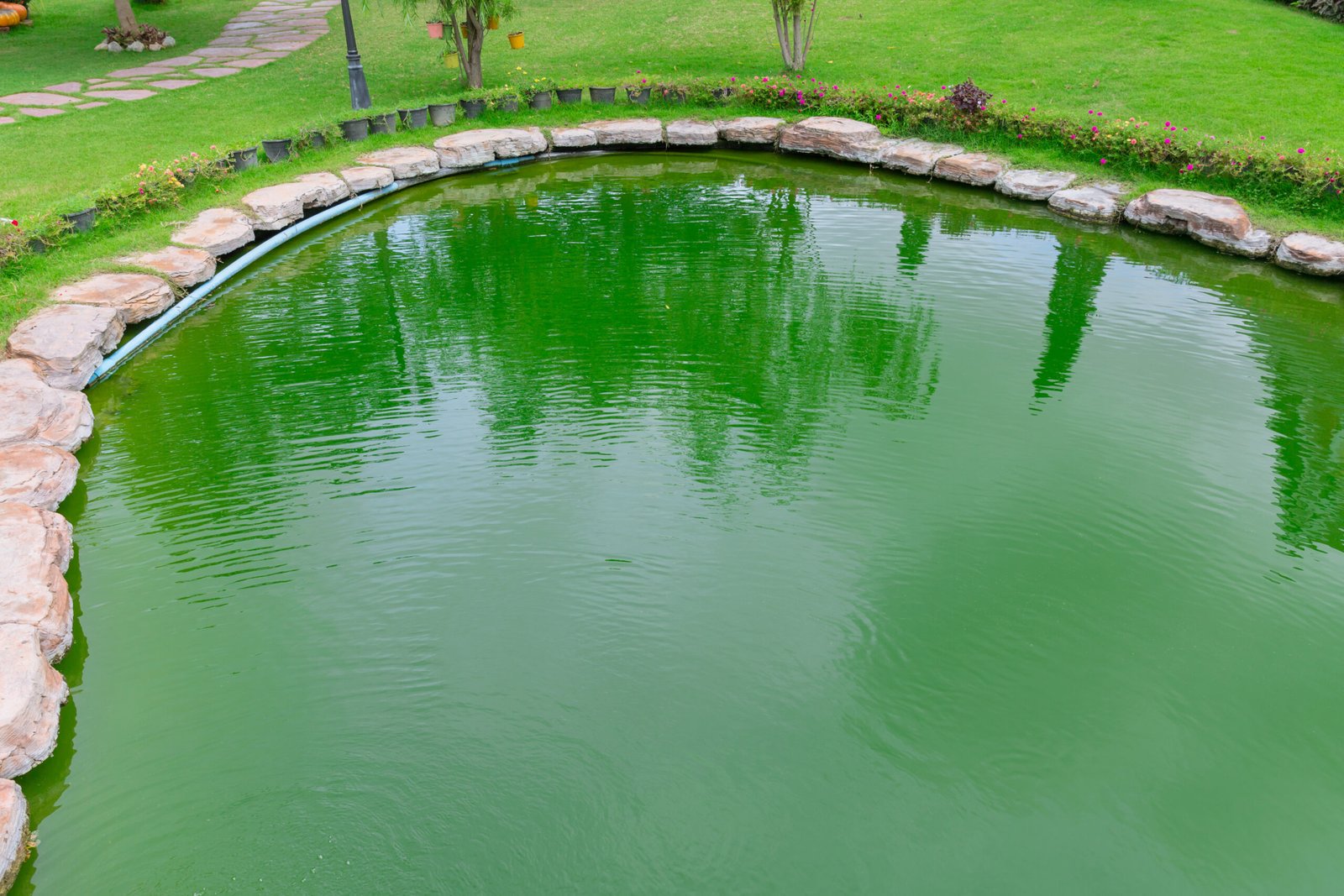
Most modern koi ponds incorporate a UVC (ultraviolet clarifier) to control green water. A UV unit must be fed continuously by a pump to function effectively. While a UV does not clear all single-celled algae in one pass, constant circulation ensures long-term clarity.
Without consistent pump flow, even the best UV clarifier becomes ineffective.
Using a Pump for Aeration – The Venturi Option
In gravity-fed filtration systems, where filter chambers sit at the same level as the pond, a submersible pump is often positioned in the final chamber to return clean water back to the pond.
By incorporating a venturi into the return line, the pressure created by the pump draws air into the water flow. This produces powerful, Jacuzzi-style aeration in the upper water layers, increasing dissolved oxygen levels — particularly beneficial during warmer months.
If you intend to run a venturi, ensure the pump you select has sufficient power to drive it effectively.
Aesthetic Functions: Waterfalls and Fountains
Beyond filtration and circulation, a pond pump can also enhance the visual appeal of your koi pond.
While fountains are less common in koi ponds than in ornamental garden ponds, they remain an option for adding movement and sound. A wide range of fountain heads and jet styles are available to suit different preferences.
More commonly, pumps are used to power waterfalls. In many koi pond builds, spoil from excavation is used to create elevation for a waterfall feature. In other cases, a pump-fed filter may discharge into a waterfall return.
It’s important to remember that waterfalls require a higher flow rate than simple return outlets. A waterfall will need a larger pump than a pond without one — otherwise, the result will be an underwhelming trickle rather than a natural cascade.
Types of Pond Pump for Koi Keepers
There are two primary types of pond pump used in koi systems: external pumps and submersible pumps.
1. External (Surface-Mounted) Pumps
External pumps are installed outside the pond and must be kept dry, typically housed in a protective pump chamber or shed. Water is drawn from the pond or filter through rigid suction pipework.
These pumps are often referred to as swimming pool-style pumps and are better suited to larger or specialist koi pond systems requiring high turnover rates. They are essential when using sand pressure filters, as they can generate the higher pressures required.
For most domestic koi ponds, external pumps are less common but highly effective in larger installations.
2. Submersible Pumps
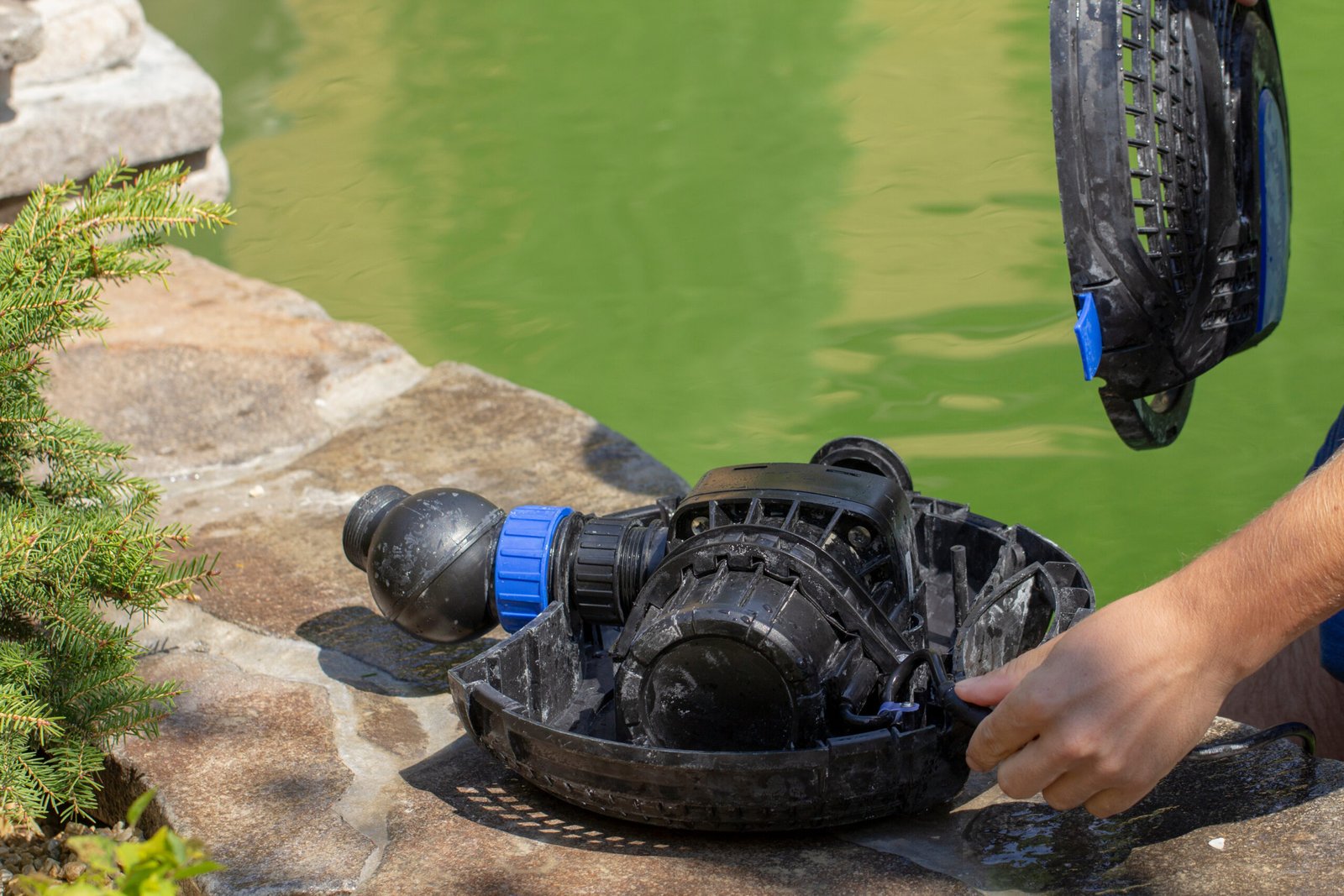
Submersible pumps are by far the most popular option for koi ponds. Installed directly in the pond or in the final filter chamber, they are compact, easy to install and available in a wide range of sizes.
Modern submersible pumps are designed with safety in mind. All electrical components are sealed in hardened resin and encased within a robust, watertight body. This ensures safe long-term operation underwater.
They are extremely versatile, reliable and often come with extended warranties due to their proven durability in demanding conditions.
Final Thoughts on Choosing the Right Pond Pump
A pond pump is not just another piece of equipment — it is the engine that keeps your koi pond alive. It drives filtration, supports bacterial colonies, powers UV clarifiers, enhances oxygenation and can create beautiful water features.
Choose carefully, match the pump to your pond’s size and head height requirements, and ensure it is powerful enough to handle your intended features. A properly selected pump will operate quietly in the background, maintaining balance and protecting your koi for years to come.