Garden Pond Filtration Explained
All living animals produce waste which is toxic and must be excreted. If such waste is allowed to build up once excreted, then it is likely that health problems will follow. This is true for pond fish just as it is for slums in city areas of developing countries. Fishkeepers have learnt from the valuable experience gained by the Victorians who invented and installed sewerage systems and later on treatment works to manage the problems of domestic waste. These principles water treatment are applied very well to fish keeping and especially in the filtration of garden ponds. Without filtration, fish keeping and pond keeping would experience many limitations.
Why do ponds need filtration?
In natural balanced aquatic ecosystems, such as oceans, rivers or lakes, fish are in balance with their surroundings. There is sufficient food on which to feed, and they are so lightly socked in relation to the water volume that there is no build up of pollution. Their natural environment is self- sustaining. This is not true in most garden ponds. Ponds are typically well stocked with fish in all shapes, colours and sizes, well above the natural stocking density. So much so that they require food to sustain them (as the pond will not provide sufficient naturally), and in a similar way, there is insufficient natural bacterial action in the ponds to breakdown the waste produced. In most cases, no filter – no fish.
How does a pond filter work?
Pond filtration can be broken down into essentially 2 functions:
Function 1- Solids Removal
A filter’s first function is to remove solids. Mechanical filtration traps solids that are carried suspended in the pond water. Solids can be removed in a number of ways, depending on the size and design of the filter.
1). Entrapment. Acting in a similar way to a sieve, the first filter media that the pumped dirty water encounters is quite coarse in structure, trapping and removing suspended solids from the water. This is the method used in standard external black box biofilters, where 2-3 grades of foam, running from coarse through to fine act to trap solids as they pass.
2). Settlement. If the speed of water flow is reduced, then its ability to keep solids in suspension is also reduced, resulting in the solids becoming settled out of suspension. This method of removing solids is used in larger, multi-chambered filter systems, where the pipework removing dirty water from the pond opens out into a vast settlement chamber. Compared with the fast flow rate of water through the pipe leading from the pond, the water in the first chamber slows down so much that solids drop out of suspension. In many such systems a second settlement chamber is fed from the first through “up and over” weir boards, slowing the flow down even more, helping to settle out the finer solid material.
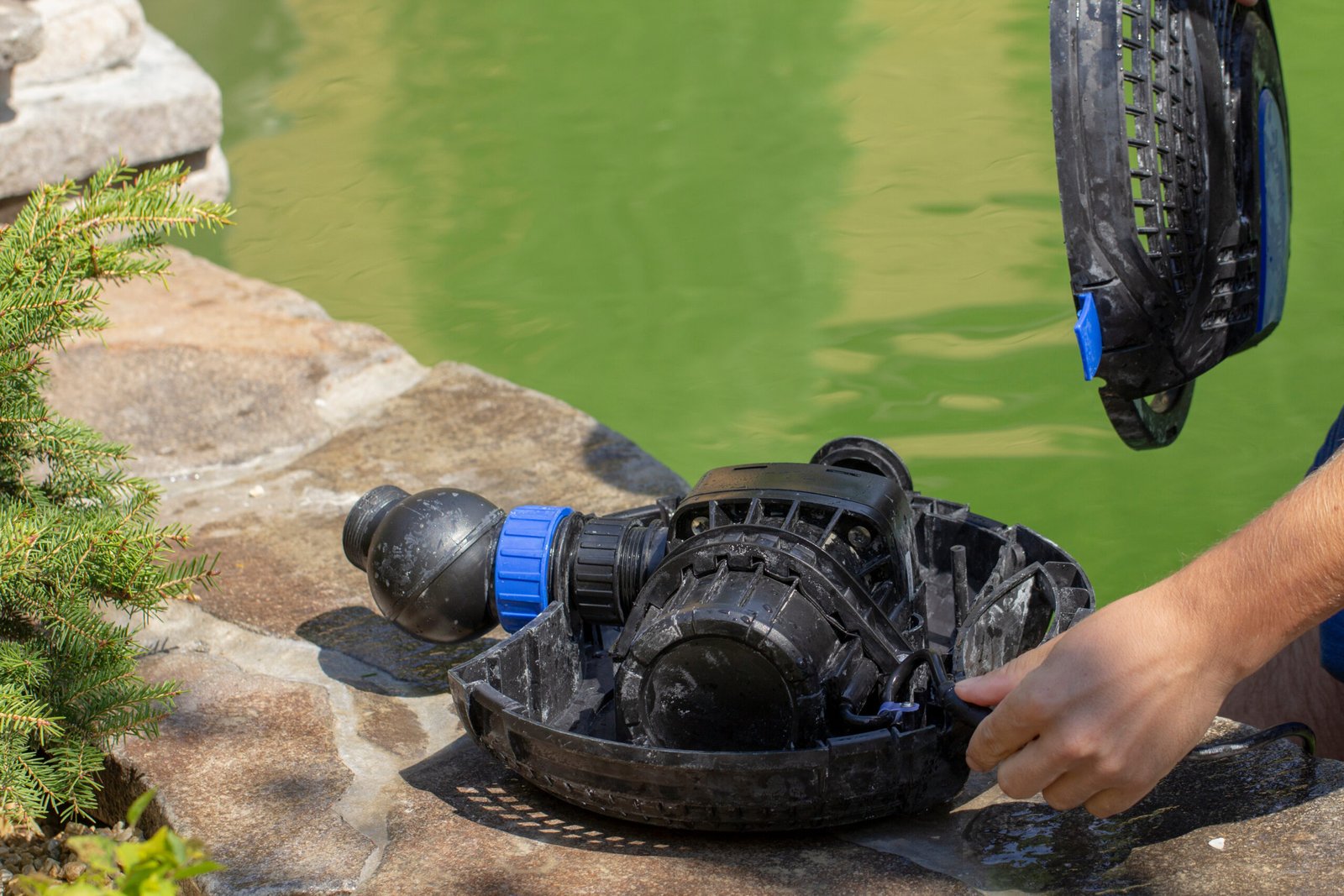
Settlement as a means of mechanical filtration is best fed by gravity rather than pumped water. Water that leaves the pond via a bottom drain is far better at handling and removing solids than a pump. Pumps are usually fitted with a foam or perforated plastic guard to prevent debris from choking the impellor. Unfortunately, this can also prevent leaves and other larger solid particles from reaching the filter, being retained in the pond, causing the water to cloud or silt to build up on the pond bottom.
More recently, pumps designed specifically to handle solids have come onto the market, and they can solve many of the traditional blockage problems.
That said, they’re not a perfect fix. Some of these pumps have a tendency to break larger debris down into much finer particles. In effect, they “liquidise” the waste. While that keeps the pump running freely, it creates a new issue: finer particles are harder to trap and much less likely to settle out in the filter.
So while solids-handling pumps improve reliability, they can make effective mechanical filtration more challenging if the system isn’t properly matched.
Is clear water always healthy?
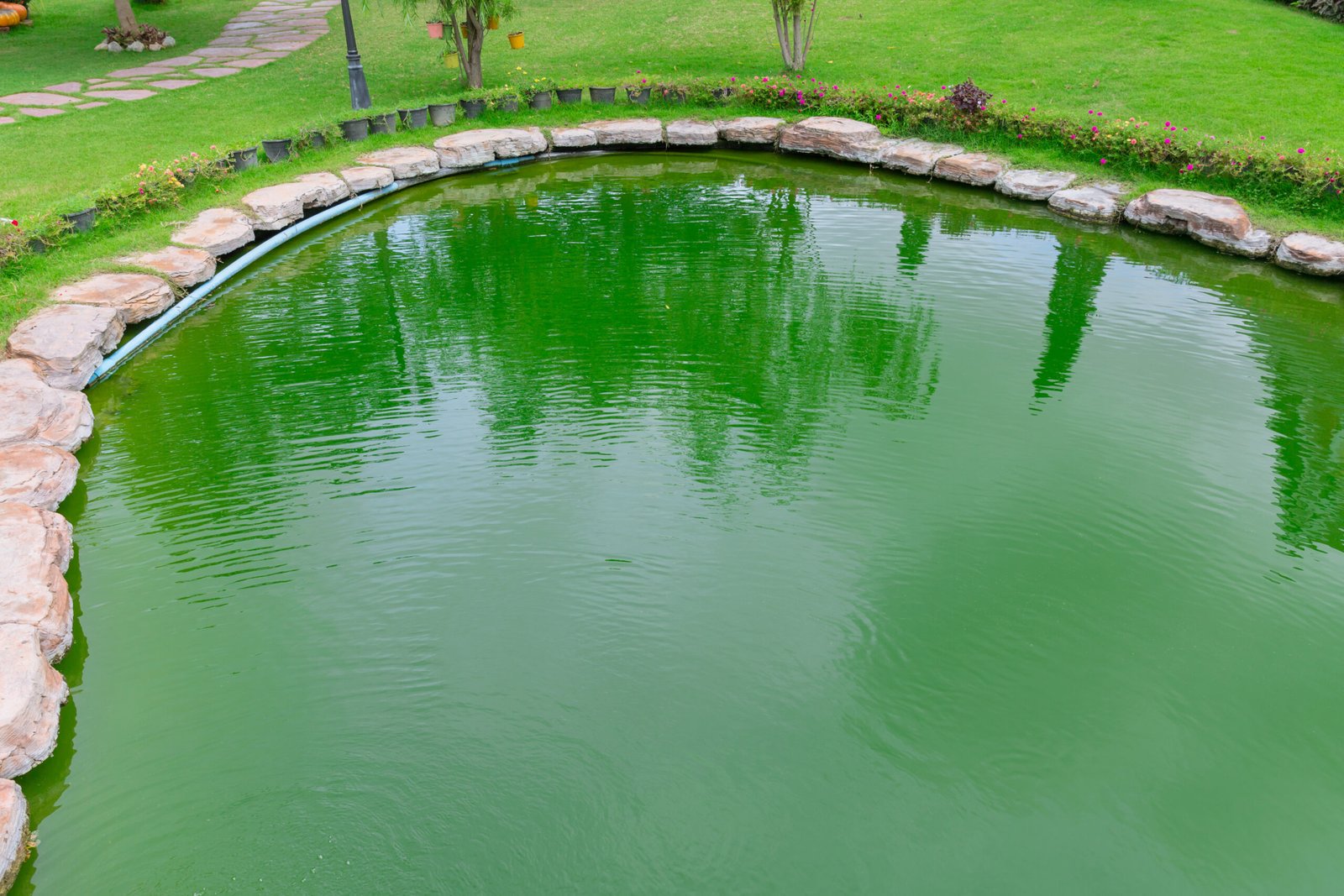
Many pond keepers are happy to see their pond clear of solid waste, taking the view that a clear and debris-free pond is a healthy pond. Paradoxically, Koi, Orfe, goldfish and other pond fish prefer the water to be cloudy and rather green, thriving in such conditions in clay-based fish farm ponds. Solid waste or suspended matter will barely affect fish health, but the real fish killer is the colourless and invisible ammonia excreted by fish. It is impossible to tell whether clear pond water is safe and healthy just by looking at it. However, if it is filtered continuously through a bio-filter, then it is very likely to be healthy, and this is the second function of filtration.
Function 2 – Bio-filtration
Having safely removed any solids from the pond water, the clear water is now passed through the part of the filter specifically designed for bio-filtration. A bio-filter, as perhaps can be gleaned from its name, is a living filter, colonised by many millions of bacteria whose role is to consume and breakdown the toxic ammonia that is constantly being excreted by fish (and other aquatic organisms).
These beneficial bacteria will colonise any hard surface (including the pond liner, pipework and rockwork). However, a bio-filter is designed to provide a vast surface area on which these bacteria can colonise, providing the surface area in a filter which may naturally be found in many square metres of a natural pond or lake bottom.
Keeping a filter alive.
In addition, these well-housed bacteria are provided with a luxury lifestyle, receiving all their requirements for a long and healthy life. The steady turnover of water through the filter provides a constant source of ‘food’ – in the form of ammonia, as well as an essential supply of dissolved oxygen. It is recommended that the pond volume is turned over at least once every 2 hours. Some bio-filters are fitted with airstones to ensure that these aerobic bacteria receive sufficient dissolved oxygen. In a balanced pond, the filter bacteria should be able to break down the ammonia at the same rate at which it is released by fish.
As this vital part of filtration is ‘living’, unlike mechanical filtration, the bacterial colony takes time to become established or ‘mature’. It is for this reason that a pond must be run-in gently over the first months of its life. Fish should be added a few at a time, so that the bacteria can adjust and catch up with the rate of ammonia being produced by the fish. If too many fish are added too quickly, then ammonia levels will rise rapidly, causing fish stress and ultimately leading to disease.
Ammonia is produced by fish as a result of them breaking down protein in the diet. The more food that is offered to the fish, the greater the levels of excretion, and the harder a bio-filter has to work. This is the reason why overfeeding kills fish, and is why water quality problems occur far more frequently in hot summer weather, when fish are feeding at their greatest.
Watch out for nitrite as well as ammonia!
Bio-filtration performs a further key role that is life-saving. Aerobic (oxygen-loving) bacteria breakdown the toxic ammonia into nitrite, which unfortunately, is still toxic. In fact nitrite has a nasty habit of being more difficult for a different set of bacteria to break down. It will persist longer than ammonia in water that is suffering a quality problem. The bacteria responsible for breaking nitrite down into relatively harmless nitrate thrive in the same conditions as the ammonia-loving bacteria, which is a steady flow of well-aerated water.
Nitrite and What It Tells You
Nitrite hangs around in pond water longer than ammonia, which makes it a really useful way to judge how mature — and how capable — your filter actually is. Testing for nitrite is quick and easy with a simple test kit, and it’s something you should be doing regularly if you want to keep tabs on how your filter is performing.
There’s only one acceptable nitrite reading: zero. Anything above that means your system is overloaded. In plain terms, you’ve either got too many fish, you’re feeding too much, or your bio-filter just isn’t big or mature enough to cope.
If you get a positive nitrite reading, act quickly:
-
Stop feeding immediately.
-
Carry out a 30% water change to dilute the toxic nitrite.
-
Don’t resume feeding until your nitrite reading is back to zero.
Simple, disciplined management prevents much bigger problems later.
Biofilter Design
A bio-filter works because it provides a home for beneficial bacteria. The media inside it needs to tick a few important boxes:
-
Large surface area for bacterial colonisation
-
Fine structure that resists clogging but is still easy to clean
-
Completely inert — it must not react with or alter the water chemistry
Gravel used to be the go-to filter media in fishkeeping, but it’s largely been overtaken by lighter, higher surface-area materials. These include foam, filter matting, sintered glass, and perforated or reticulated pipe. Modern media simply offer more biological capacity in a more efficient format.
Clearing Green Water
Standard pond filters are excellent at removing solid waste and detoxifying water — but they won’t reliably clear green water.
The problem is microscopic algae. The individual cells are far too small to settle out or be captured mechanically by most filters.
If you want guaranteed results, install an ultraviolet clarifier (UVC) between the pump and the filter. The UV radiation causes the algae cells to clump together into sticky green “flocs.” Once clumped, they’re large enough to be removed by the filter.
One important point: UV units generate a surprising amount of solid waste as they clear the algae. That extra load can push a small box bio-filter to its limits. If you’re running a UVC, it’s smart to oversize your filter so it can comfortably handle the additional solids.
Care of the filter
Filters must be treated like a living entity. If they are not provided with oxygen, and food, they will deteriorate and die. For this reason, a bio-filter must be run continuously, ensuring that the bacteria are provided with the materials for life.
There are times, as with any filter, that it must be cleaned and maintained. In the summer especially, waste will build up rapidly in a settlement chamber or within foams, and these must be cleaned out before they clog or restrict the filter too much. This can be done without disturbing the more sensitive bio-filter.
If cleaning out a filter chamber, the action of simply opening a valve may be sufficient to purge the chamber. In a box filter, where the foam layers may act as both mechanical and biological media, care must be taken when rinsing out the foams.
Bacteria are very sensitive to changes in their environment and any adverse action could set the filter’s maturity and efficiency back months. For this reason, when rinsing out the foams or cleaning any biological media, buckets of pond water should be used. If raw tap water is used, then chlorine and other deficiencies in water quality can have a detrimental effect on the bacterial.
Pond Filter Designs: Advantages and Disadvantages.
Box filter
Advantages:
1. Cheap, and easy to install, ideal for a novice.
2. Quite effective in small/medium ponds
3. Can be installed in an existing pond.
Disadvantages:
1. Difficult to hide, as they are best placed above the water level
2. Do not usually have separate mechanical and biological areas which can cause difficulties during maintenance.
3. Must be fed via a submersible pump, which to be efficient, must handle solids.
Gravity-fed multi-chamber filter
Advantages:
1. Its large size and discrete chambers make it a very efficient filter.
2. Gravity fed from a bottom drain, no risk of overflowing, and can handle solids very well.
Disadvantages:
1. Relatively expensive to install, taking up a lot of room (although it is below ground).
2. Must be installed when pond is constructed (generally not for the novice).