Choosing a Pond Filter

Garden Pond Filtration Explained: The Unsung Hero of a Healthy Pond
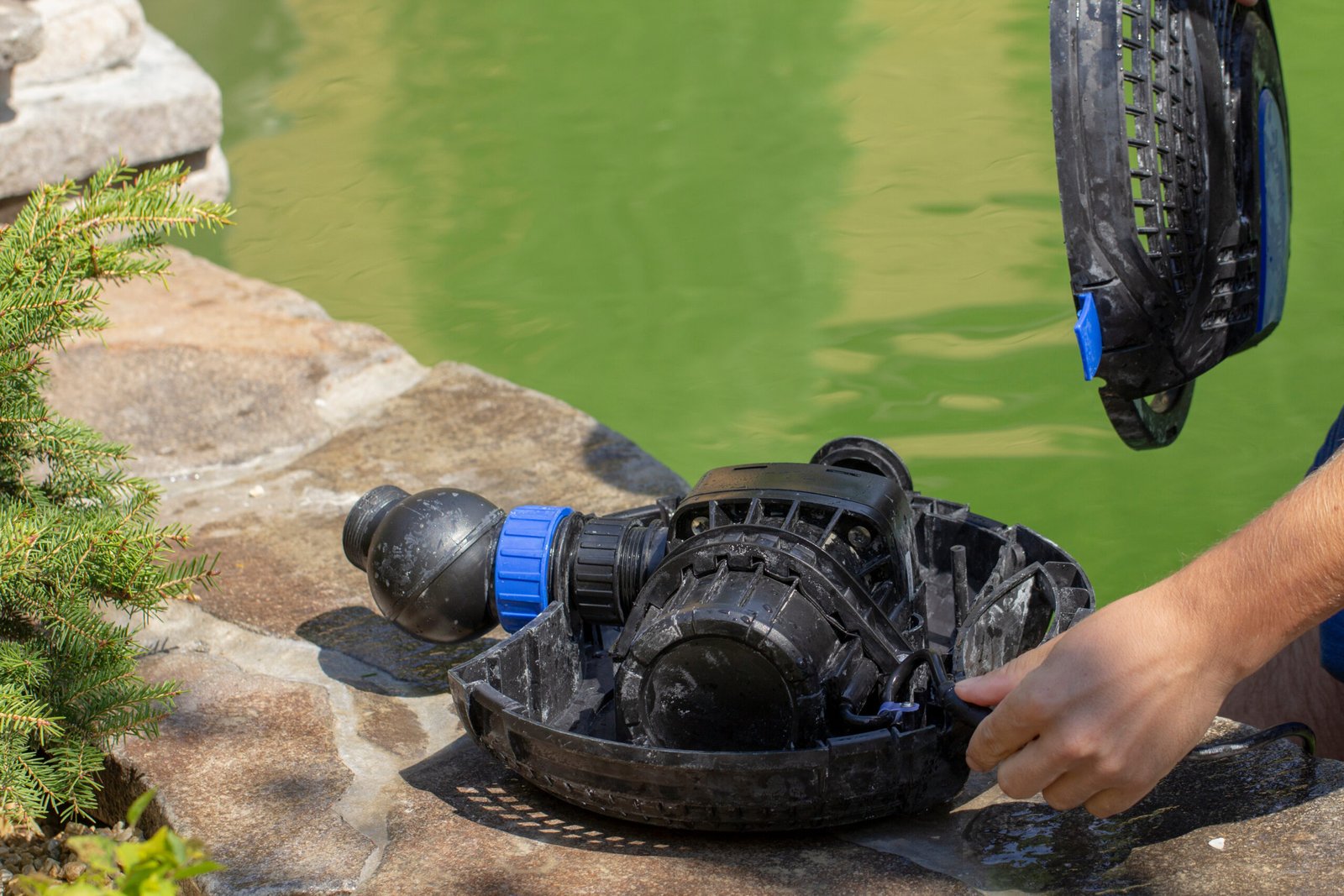
If you drive a car, you probably fall into one of two camps: those who admire the styling and driving experience, and those fascinated by what lies beneath the bonnet. I belong firmly to the first group — I can’t remember the last time I lifted the bonnet to inspect the engine.
Garden pond filtration is remarkably similar.
Most people admire the tranquillity of cascading water, the shimmer of colourful fish gliding through clear depths, and the overall serenity of a beautiful pond. Few stop to consider what is happening behind the scenes to create that balance. Yet if the “bonnet” were lifted, revealing pipework and filter units, the illusion of natural perfection might fade slightly.
And that is precisely the role of a pond filter: the unsung hero working quietly in the background to maintain a thriving aquatic world.
Does Every Pond Need a Filter?
The short answer: not always.
When a Filter Is Optional
If your aim is to create a wildlife pond that mimics a natural ecosystem, heavy filtration may not be necessary. Wildlife ponds are lightly stocked (or contain no fish), rely heavily on dense planting, and aim to replicate a natural ecological balance.
In these cases, plants and microorganisms can maintain equilibrium without artificial filtration.
Similarly, if your pond sits somewhere between a wildlife pond and an ornamental fish pond — perhaps with only a small pump to create gentle water movement — filtration may be optional.
When Do You Definitely Need a Filter?
If your pond contains fish, filtration becomes far more important.
Fish, like any animal, produce waste. In a closed environment such as a garden pond, that waste does not disperse naturally as it would in rivers, lakes, or oceans. Instead, it accumulates.
In natural bodies of water, fish stocking levels are extremely low relative to water volume. The ecosystem is self-sustaining.
In most garden ponds, however, fish are stocked at far higher densities, are often fed regularly, and live in limited water volume.
Without filtration, toxic waste products such as ammonia and nitrite can quickly reach harmful levels.
An effective pond filter reduces these risks and creates a stable environment for fish to thrive.
The Benefits of Filtering a Pond
1. Healthier Fish
A pond filter performs two vital roles: removing solid waste such as uneaten food, fish waste and garden debris, and supporting beneficial bacteria that break down toxic dissolved waste.
Over time, the filter “matures” and becomes a living biological system that actively detoxifies the water.
2. Clearer, Better Oxygenated Water
Circulating water increases oxygen distribution throughout the pond.
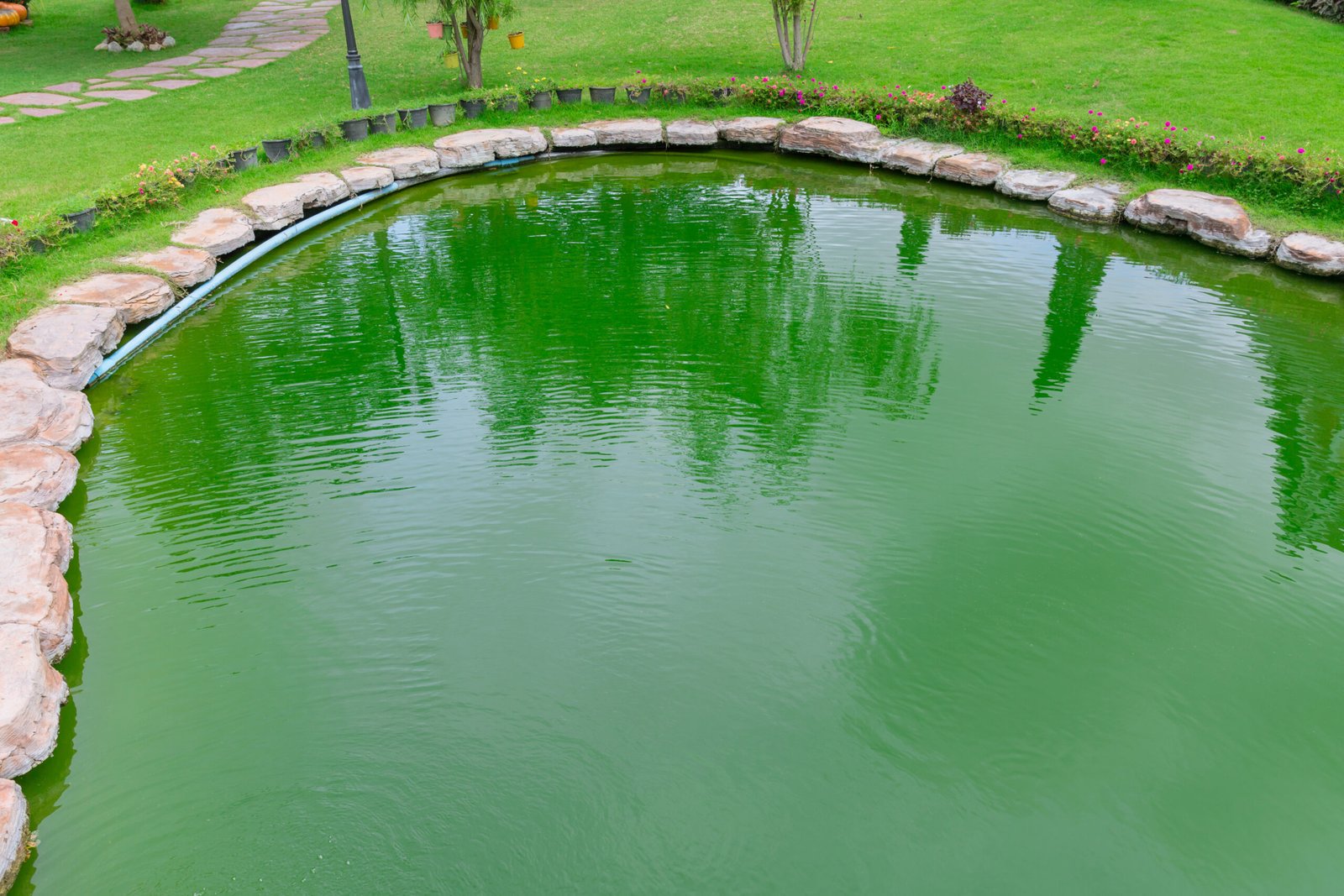
Many filters also incorporate an ultraviolet clarifier (UVc). A UVc causes microscopic algae responsible for green water to clump together, allowing the filter to trap these particles and produce crystal clear water.
Without a filter, dead algae would simply circulate back into the pond, creating what looks like a green snowstorm.
3. Greater Stocking Capacity
A biofilter increases the pond’s ability to safely support more fish.
This means you can stock more fish, feed more confidently, and reduce the risk of pollution-related problems.
4. Reduced Long-Term Maintenance
With proper filtration, solid waste is continuously removed, sediment build-up is reduced, and major pond clean-outs can be delayed for years.
Regular filter maintenance replaces disruptive pond overhauls.
Choosing the Right Filter: What You Need to Know
Before purchasing a filter, consider two key factors.
1. Pond Size
Filters are rated by pond volume, typically in 500, 1000 and 1500 gallon categories. Always calculate your pond’s volume before selecting a unit.
2. Fish Type and Stocking Density
A lightly stocked pond with mixed species requires far less filtration than a heavily stocked koi pond.
Standard garden pond filters are compact and usually single chamber. Koi filters are larger, multi-chambered and significantly more robust.
Types of Pond Filters
Internal Filters
These are installed inside the pond and are suitable for smaller ponds. They often consist of large foam blocks, are easy to install, but can block easily and require frequent cleaning.
External Filters
These are installed outside the pond and are divided into two main systems.
Pump-Fed Filters
These are the most common type, easy to retrofit, and available in single-chamber trickle or pressurised designs. They are suitable for most ponds up to 1500 gallons.
Pressurised filters can be buried underground, making them easier to conceal, although they may require more frequent maintenance.
Gravity-Fed Filters
Designed for large koi ponds, these systems must be planned during pond construction. They use multiple chambers to separate mechanical and biological stages and represent the premium filtration solution.
They are typically chosen by serious koi enthusiasts.
How Does a Pond Filter Actually Work?
A pond filter performs two complementary functions.
1. Mechanical (Solids) Filtration
This stage removes physical debris such as leaves, fish waste, uneaten food and suspended particles.
Water passes through progressively finer filter media, typically layered foam that traps solids like a sieve. Mechanical filtration protects the biological stage from clogging.
2. Biological Filtration
Filter media such as porous foam and ceramic material provides surface area for beneficial bacteria to colonise.
These bacteria convert toxic ammonia into nitrite and then convert nitrite into less harmful nitrate.
This process is invisible but essential for fish health. Biological media can take several months to fully mature.
Clear Water Isn’t Always Healthy
Mechanical filtration improves clarity. Biological filtration improves safety.
Ammonia and nitrite are colourless and invisible. A pond may look crystal clear but still contain dangerous levels of dissolved toxins.
Healthy water is about chemistry, not just appearance.
What About Running Costs?
Filters themselves do not consume energy, but pumps and UV clarifiers do.
Running costs depend on pump wattage, UV unit size and daily operating time. Modern energy-efficient pumps help minimise ongoing expense.
Final Thoughts
A pond filter may not be glamorous. It may never receive admiration from visitors enjoying the view of shimmering fish and cascading waterfalls.
But without it, many ornamental ponds simply would not function safely or sustainably.
Like the engine beneath a car’s bonnet, it is the hidden mechanism that makes everything possible.
Function 2 – Bio-filtration
Having safely removed any solids from the pond water, the clear water now passes through the part of the filter specifically designed for bio-filtration. As its name describes, a bio-filter is a living filter, colonised by many millions of bacteria whose role is to consume and breakdown the toxic ammonia that is constantly being excreted by fish (and other aquatic organisms).
These beneficial bacteria will colonise any hard surfaces (including the pond liner, pipework and rockwork making them feel slippery and slimy). However, a bio-filter is designed to provide a vast surface area on which these bacteria can colonise, providing the surface area in a filter which may naturally be found in many square metres of a natural pond or lake bottom.
Keeping a filter alive.
These well-housed bacteria are provided with a luxury lifestyle, receiving all their requirements for a long and healthy life. The steady turnover of water through the filter provides a constant source of ‘food’ – in the form of ammonia, as well as an essential supply of dissolved oxygen. It is recommended that the pond volume is turned over at least once every 2 hours.
As this vital part of filtration is ‘living’, unlike mechanical filtration, the bacterial colony takes time to become established or ‘mature’ and a filter must be run-in gently over the first months of its life. Fish should be added a few at a time, so that the bacteria can adjust and catch up with the rate of ammonia being produced by the fish. If too many fish are added too quickly, then ammonia levels will rise rapidly, causing fish stress and ultimately leading to disease.
Watch out for nitrite as well as ammonia!
Aerobic (oxygen-loving) bacteria breakdown the toxic ammonia into nitrite, which unfortunately, is still toxic. In fact, nitrite has a nasty habit of being more difficult to break down than ammonia and will persist longer than ammonia in water that is suffering a quality problem.
6. What about maintenance?
Filters must be treated like a living entity. If they are not provided with oxygen, water and food, they will deteriorate and die. For this reason, a bio-filter must be run continuously, ensuring that the bacteria are provided with the materials for life.
There are times, as with any filter, that it must be cleaned and maintained. In the summer especially, waste will build up rapidly within foams, and these should be cleaned out before they clog or restrict the filter. This can be done without disturbing the more sensitive bio-filter.
In a box filter, where the foam layers may act as both mechanical and biological media, care must be taken when rinsing out the foams.
Bacteria are very sensitive to changes in their environment and any adverse action could set the filter’s maturity and efficiency back months. For this reason, when rinsing out the foams or cleaning any biological media, buckets of pond water should be used. If raw tap water is used, then chlorine and other variations in the water quality can have a detrimental effect on the bacteria.
Will I need to buy anything else?