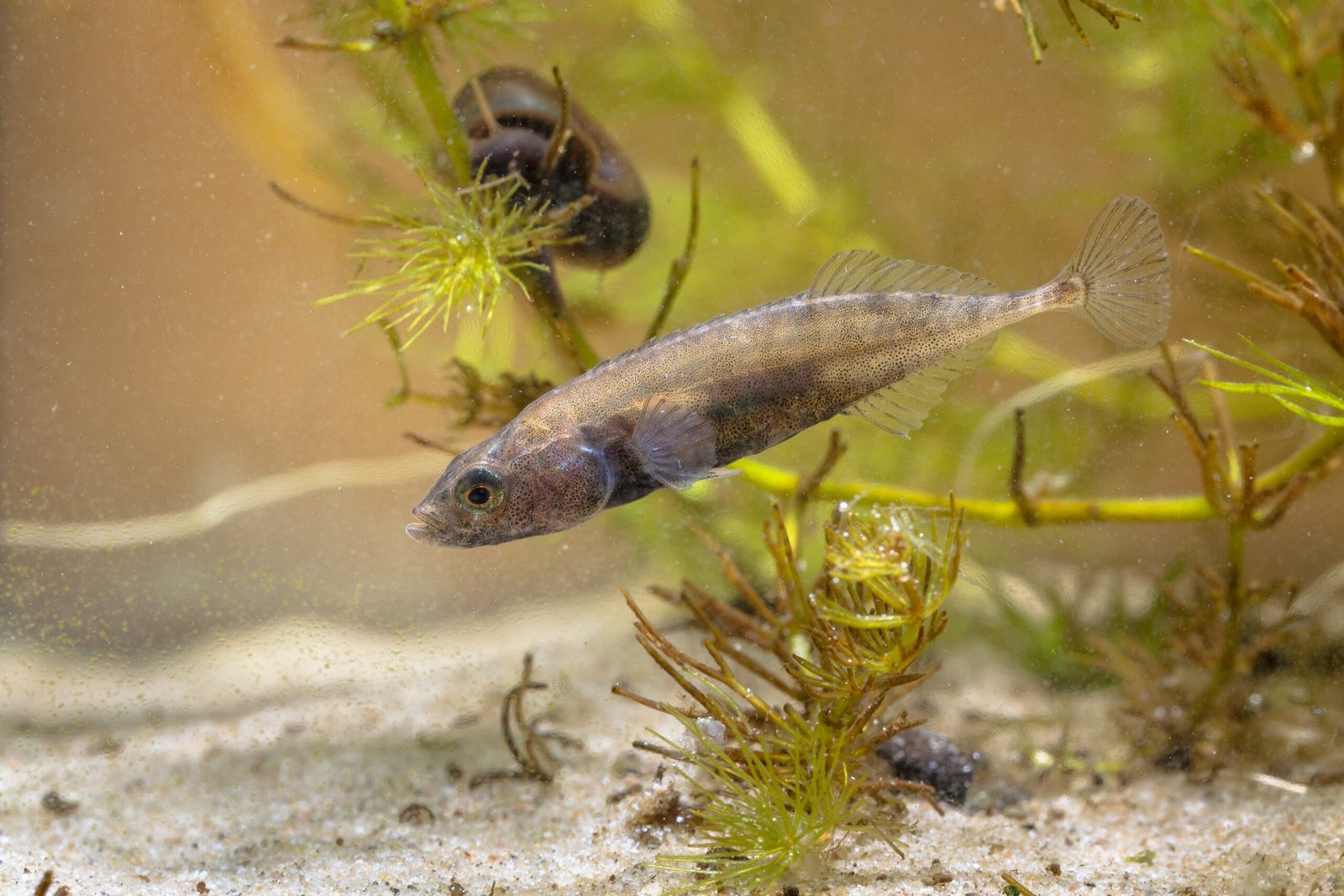
Respiration in ponds

Respiration and how it affects pond health and performance.
Pond fish are similar to the majority of other living organisms in that they have an insatiable demand for two products from their environment. The two requirements are energy and oxygen. If a pond is unable to satisfy and fully resource these requirements then imbalances within the pond will occur, leading to increased competition for the limited resources, a battle which, unfortunately, fish will never win.
The majority of pond organisms (including fish) are aerobic, requiring oxygen which they use to release energy from food during a process called respiration. Without oxygen, fish cannot release the energy they require from food (which is true for all aerobic heterotrophic organisms), creating a significant association between oxygen and energy.
What is respiration?
Respiration is often confused with the physiological process of breathing (ventilation of the gills in fish) when in fact it is a biochemical reaction with specific inputs and outputs. Fish and other pond organisms can release the energy in a very controlled way from food that is made up of at least carbon, hydrogen and oxygen atoms. This is the make up of carbohydrates (sugars) but lipids and proteins can also serve as energy sources, containing additional elements that are broken down and excreted later.
This may appear heavy going for a pond keeper who wants to keep fish in the best of health, but respiration is central to life in a garden pond and is at the hub of maintaining ideal water quality.
To confirm that respiration is a biochemical process, it can be summarised as follows:
C6H12O6 + 6O2 = 6CO2 + 6 H2O + 674 kcal Energy
In words:
Food + oxygen releases carbon dioxide, water and energy.
The above equation that describes the processes of aerobic respiration shows that:
1. Food, in this case, glucose, is the source of stored energy. If it were lipids or proteins then other elements such as nitrogen and phosphorus would be attached to the carbon, hydrogen and oxygen being excreted later as nitrogen (ammonia) and phosphates, playing no role in the release of energy.
2. Oxygen is required for the effective release of energy.
3. Besides releasing energy, respiration has two other by-products. These are water and carbon dioxide.
By simply looking at the inputs and outputs of respiration (remembering that pond fish represent only a part of the respiring organisms in a pond) we can see that this fundamental process presents some serious implications for the management of a garden pond.
We need to consider whether our pond is receiving sufficient oxygen to allow the complete array of organisms to respire efficiently, recognising that for a mature pond to remain balanced, all contributory organisms must be able to function healthily. Furthermore, focussing on the fish themselves, our pond is supporting diverse populations of micro organisms (that are in turn, sustaining our fish’s environment) and if oxygen becomes limiting, will lead to a deterioration in water quality and fish health.
Which organisms besides fish require oxygen?
All organisms that respire aerobically require oxygen. This includes heterotrophic bacteria that breakdown organic matter (and autotrophic bacteria that use oxygen during their release of energy from inorganic compounds such as ammonia and nitrite), fungi, protozoan organisms that scavenge the pond for debris and larger metazoan organisms that will filter and graze on organic material. Plants too respire constantly throughout the day and night, which includes, of course blanketweed (for those who consider they don’t have a planted pond!) and any other algae adhered to pond sides and pipework, as well as any larger aquatic plants that may be found within a planted pond.
There are periods when pond organisms are more active than others, digesting and respiring to keep on top of the pond’s water quality. These periods are when temperatures are at their highest and the food entering the pond is also at its greatest. Pond fish require more oxygen during the active warmer months and the resultant accumulation of dissolved and solid organic matter in the pond can lead to a huge increase in demand by the smaller organisms further down the food chain as they work at breaking them down. So extreme is their need for oxygen during the respiration of the accumulated organic matter, that it is these periods that will lead to severe oxygen depletion. We must pre-empt such periods of increased respiration by supplying additional aeration.
Biochemical Oxygen Demand (BOD).
The phenomenon of organisms ‘demanding’ more oxygen in water where organic (and inorganic) by-products accumulate is recognised by water companies and other environmental bodies. They can assess a water sample’s level of pollution by determining its demand for oxygen. The greater the demand, the worse the pollution. A sample of water is taken and stored under standard conditions for 5 days, measuring the oxygen levels prior to and after the test. Those samples that are more polluted have a lower final DO level due to the greater oxygen demand by the bacteria in the sample as they endeavour to break down the organic matter. We should aim for the BOD of the water in our ponds to be as low as possible, for the stability of our water quality. This can be achieved by regularly purging any settlement chambers of organic debris, reducing the potential for excessive bacterial action and oxygen demand. A foam fractionator can also remove dissolved organic matter that a settlement chamber cannot remove.
Paradoxically, compared to a filtered garden pond, the BOD of a clay pond is likely to be comparatively high, yet will still typically provide ornamental carp with an unrivalled environment for health, growth and colour. How can two different environments suitable for fish differ so much in relation to their BOD?
Stocking rates will be much lower in a semi-intensively farmed clay pond (for even larger specimen Japanese koi, extensive stocking rates are employed) which means that there is less competition for oxygen. Furthermore, the pond environment is managed by koi farmers to be a virtually self-sustaining ecosystem providing a good proportion of a koi’s diet through natural live food. Clay ponds are manured by koi farmers, using both organic and inorganic fertilisers (a practice that is bound to increase the BOD of the pond) but in doing so provides a source of nutrients to maintain the algae and the plethora of grazing organisms on which koi will feed. So a pond (whether natural or artificial) will have a capacity to support a certain demand for oxygen put on it by a range of respiring organisms. In a heavily stocked garden pond, the bulk users will be fish, whereas in a lightly stocked clay pond, the bulk of the oxygen users will be the organisms that condition and maintain the pond environment. In either case, so that fish health and growth can be maintained, it is vital that dissolved oxygen levels are sufficient to sustain fish.
Having considered the inputs required to satisfy the fundamentals of respiration we must also be aware of how the outputs of respiration may affect the stability of a pond.
The objective of respiration is to release energy from food, but as is true for many biochemical reactions, there are also by products that must be accounted for. The outputs are relatively straightforward if carbohydrates (sugars) are the ‘fuel’, but complications can arise if lipids or proteins are used by fish for energy in place of carbohydrates.
When carbohydrates are used in respiration, the outputs in addition to the desired energy are water and carbon dioxide. The water is harmless and easy to deal with in an aquatic environment, but the carbon dioxide can cause the water’s pH to become more acidic.
During periods of excessive respiration, high levels of carbon dioxide are released by all aquatic organisms. The carbon dioxide once dissolved in the water forms carbonic acid (a mild acid) which in turn can threaten an ideal pH of between 7.5 and 8.5. The closer the pH moves towards 7.0, the less buffered it becomes, making it more likely to become acidic.
Plants can be quite useful during the day at absorbing the excess carbon dioxide during photosynthesis, but at night, the carbon dioxide levels can increase significantly (and oxygen levels decrease), making the pH more likely to be acidic before sunrise. In fact, a well recognised phenomenon called ‘dawn depletion’ describes the downward effect excessive respiration can have on oxygen levels in a planted pond.
If lipids or proteins are used as an energy source, they are not burnt as cleanly as carbohydrates, tending to release additional by-products. When lipids are used they will lead to the excretion of phosphates, while proteins used in respiration will lead to an increase in nitrogen excretion (in the form of ammonia) both of which are less desirable than the cleaner by-products from carbohydrates, causing an accumulation of compounds that can enhance algae growth.
Additional aeration during periods of high respiration.
Being fully aware of the needs of all the respiring organisms in a pond, and that such needs are at their greatest in warmer temperatures when food is being utilised (and excreted) at its highest rates, these are the periods above all when additional aeration should be provided to a pond. Not only will this enhance the diffusion of oxygen into the water, improving DO, but additional agitation will also lead to a drop in the levels of dissolved carbon dioxide.
Research has also shown that fish utilise their food more efficiently when DO levels are higher, aiming for a minimum of 6mg/l. Recognising that DO levels can be low prior to a biofilter and even lower immediately after, zones of dedicated aeration in such areas can help to maintain the pond’s ecosystem in top condition.
In summary, respiration is a natural process, essential for life and fundamental to the health and maintenance for pond fish and pond-sustaining organisms. By appreciating the demands and consequences of this vital process, we can provide the pond with sufficient oxygen to perform effectively and efficiently – something that must be the objective of every pond keeper.