Creating a Natural Looking Garden Pond
Some of the most striking garden ponds are those that look as though they have always belonged in their setting. The kind that appear to have been shaped by years of weather, subtle erosion and natural planting rather than by a spade and liner. We instinctively recognise when something looks artificial. Nature positions water effortlessly, blends it into the landscape and plants it in layers. If you want a pond that looks authentic, you need to think the same way.
Positioning a Pond for a Natural Effect
In the wild, ponds tend to form in low-lying hollows where water naturally collects. Most gardens, however, are relatively flat, so simply copying this logic isn’t always practical. Low areas may also suffer from a high water table, which can make excavation difficult and cause groundwater to seep into the dig before lining.
When choosing where to build a garden pond, avoid areas directly beneath trees wherever possible. Leaf fall can quickly overwhelm a planted pond, and certain trees such as oak, poplar, willow, elder and yew can introduce excessive debris or even toxic material. Tree roots also complicate excavation and may later threaten the integrity of a liner. Similarly, building too close to walls or foundations can create practical challenges during installation and future maintenance.
Near the House or Further Away?
The decision to site a pond close to the house or further into the garden depends largely on how you intend to enjoy it. A pond near a patio or conservatory allows year-round viewing and simplifies the installation of electricity for pumps or lighting. The building may also provide shelter from wind. However, proximity to the house can limit sunlight exposure and restrict landscaping options, particularly if you want to create raised rockwork or a waterfall backdrop.
Positioning the pond further away often makes it easier to create a more natural setting. Excavated soil can be reused to build gentle contours, a rockery or a waterfall. A pond located deeper within the garden can feel like a destination — a separate aquatic oasis that enhances the overall landscape design.
Designing a Natural Pond Shape
Natural ponds rarely have sharp angles or tight corners. Instead, they feature sweeping curves, soft edges and gradual transitions. When designing your pond, avoid awkward indentations and narrow recesses. These create stagnant areas in the water and complicate liner installation. A smooth, flowing outline not only looks better but is also easier to build and maintain.
Getting the Depth Right
A well-designed planted pond incorporates varied depths. Marginal shelves around parts of the perimeter should sit at least nine inches below the surface to accommodate planting baskets. These shelves need not run continuously around the entire pond; variation adds visual interest and flexibility for different plant species.
The central area should be deeper, ideally at least two feet for a typical ornamental pond. Greater depth improves temperature stability and reduces the risk of freezing solid in winter. More water volume also means better dilution of waste and greater environmental stability. Simply put, a larger body of water is easier to manage and safer for fish.
Stocking a Planted Pond Sensibly
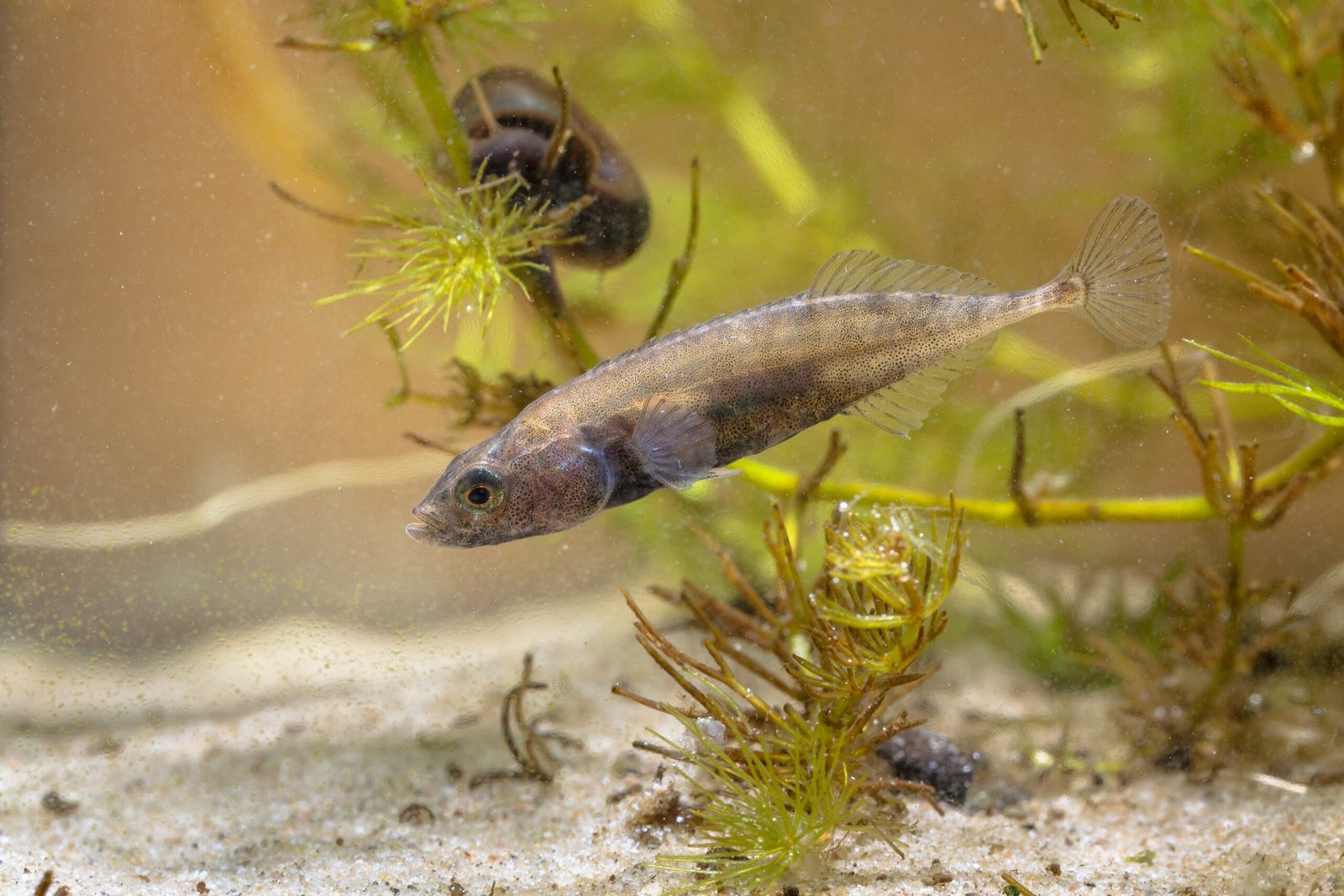
Most coldwater pond fish are compatible with one another, but not all are suitable for a carefully planted pond. Koi and ghost carp are known for disturbing plant baskets while foraging and can quickly disrupt a delicately balanced design. For a traditional planted garden pond, standard goldfish varieties, comets and shubunkins are generally more appropriate. Golden orfe and tench can also work well in suitable conditions.
Stocking levels are best estimated using surface area rather than total volume. As a general guideline, aim for around three inches of fish (excluding tail) per square foot of clear surface area, stocking gradually and monitoring water quality closely. The hottest summer conditions will test your pond’s balance most severely, so plan stocking levels conservatively.
Essential Pond Equipment for a Natural Pond
One of the advantages of a planted pond is that it can operate with minimal equipment if stocked lightly.
For construction, the two most common options are preformed fibreglass ponds or flexible PVC liners. Preformed shells offer convenience but restrict design flexibility. A liner allows complete creative control and can adapt to any shape you excavate. When calculating liner size, measure the maximum length and width and add twice the depth to both dimensions to allow sufficient overlap.
If fish numbers are modest, you may not need a complex filtration system. In lightly stocked wildlife-style ponds, plants and natural processes can maintain balance. If additional circulation is required, a small submersible pump with a simple internal foam filter may be adequate. Larger fish populations require more substantial biological filtration, often using an external biofilter fed by a pump capable of circulating the full pond volume approximately every two hours.
Planting for Balance and Beauty
Planting is what transforms a hole filled with water into a living ecosystem. A natural pond benefits from layered planting: marginals around the edges to soften transitions, submerged oxygenators to compete with algae and deeper water plants such as lilies to provide shade and seasonal colour.
When thoughtfully positioned, planted and stocked, a garden pond can blend seamlessly into its surroundings. The goal is not to copy nature perfectly, but to borrow its principles — flowing shapes, balanced depth, restrained stocking and layered planting — so that your pond feels as though it belongs exactly where it sits.
Planting
In a planted pond, the aquatic vegetation will play a number of roles in the pond.
1. Functional. The pond water will have a tendency to turn green or be invaded by blanketweed and just as in a garden border, desirable plants should be chosen to compete against these unwanted weeds. Many submerged plants can also provide spawning and nursery areas for fish and their fry.
2. Aesthetic. Plants should be chosen and placed within a pond to soften any harsh edges and to complement other features in the pond. For example, tall marginal plants should be placed towards the rear of the pond and low, sprawling marginals to the front.
There are hundreds of varieties of aquatic plant to choose from so it is more useful to categorise the different depths and zones within a pond where plants will thrive.
There are essentially 3 areas within a pond which can be planted.
1. Marginal plants on shelved areas.
2. Deepwater submerged plants on the pond bottom.
3. Surface or floating plants.
The majority of plants (except the floaters!) are placed in a plastic mesh basket which is lined with hessian or foam and filled with a heavy loam aquatic soil. The soil is then covered with a generous layer of gravel to prevent the soil from escaping and the basket is gently lowered to the desired position in the pond.
Pond Maintenance
Pond maintenance should be carried out on a basis of a little and often. A pond should never be completely emptied if at all possible, but maintenance carried out periodically to keep on top of necessary chores. Leaves should be removed regularly and the pond bottom should be cleaned to remove the inevitable build up of silt (using a pump or aqua-vacuum).
With minor tinkering, the balance of a pond is likely to be maintained which will help to keep the water, fish and pondkeeper healthy and happy for many years to come.
The Goldfish.
The goldfish can be regarded as the standard bearer of all ornamental fish. Initially kept and prized by the wealthy rulers of China over 1500 years ago, their legacy for us today is the world’s most widely kept pet, probably the first ornamental pet fish in the world to be cultured, the goldfish. Through the meticulous attention to detail associated with the advanced Chinese culture and civilisation all those years ago, goldfish were selectively reared from the dull, brown and visually unappealing native crucian carp to produce the simply beautiful fish we have today.
Varieties
To satisfy the demand for a wider range of goldfish forms, selective breeding of more exotic or ‘fancy’ varieties of goldfish has lead to there now being over 300 different goldfish varieties. Although fancy varieties of goldfish have been known to thrive and over-winter well in garden ponds, these are the exception rather than the rule. Standard, more traditional varieties of goldfish varieties fair better in UK garden ponds which include the standard goldfish and the longer tailed comet goldfish, sarasa comets (red and white). There is a limited number of UK bred goldfish available each year but most goldfish arrive in the UK from Israel, USA and China. They are available in a wide range of sizes from 1” to 14” and it can be very rewarding (and cheaper!) to buy smaller specimens to nurture, growing to suite the size of a pond. There is usually a wider variety of colour variations to choose from in the smaller size ranges enabling the selection of different coloured and patterned fish, making it easier to keep an eye on the progress of each fish. More success is usually achieved buying half a dozen at a time as goldfish are quite gregarious and have been known to sulk when kept in low numbers.
Bowl, tank or pond?
The popularity of goldfish is due largely to them being hardy, undemanding and straightforward to keep. They are an incredibly hardy fish, able to tolerate a wide range of temperatures and water conditions. What other fish can be kept in a bowl quite successfully for over 30 years? However, this is no excuse to be tempted to treat them poorly (as is often the case when seen at fairgrounds) and to see goldfish at their best they should be kept in a well-planted spacious garden pond.
Feeding
Goldfish are omnivorous and are easily catered for, accepting both flaked and pelleted foods. Fresh food ‘treats’ such as daphnia and chopped worm can be offered and a well-planted ‘natural’ pond will provide lots of opportunities for this scavenging fish to browse and forage. The gold or red skin pigmentation can actually be enhanced by feeding a colour enhancing diet.
Overwintering
Goldfish can quite easily tolerate UK winters in garden ponds of at least 18 inches in depth. Every effort should be taken that they feed well in the summer to lay down sufficient reserves for the winter and if the pond freezes over, to ensure that there is a hole maintained in the ice to prevent a build up of toxic gas below the ice.
Breeding behaviour.
Between May and July, mature goldfish (2-3yrs) are likely to spawn in the pond, chasing each other vigorously around the pond. What may appear to be fighting is actually the reverse, with males chasing and bashing females to release their eggs. On close inspection, males can often be seen with white Braille-like pimples on their head and gill-covers. These tubercles give the male purchase when pushing against the female. After spawning, adhesive translucent eggs will be evident on submerged weed and fry will hatch in 4 to 5 days with a few even surviving in a densely planted pond.