Creating a Wildlife Pond

Planning and Creating a Wildlife Pond with Sticklebacks
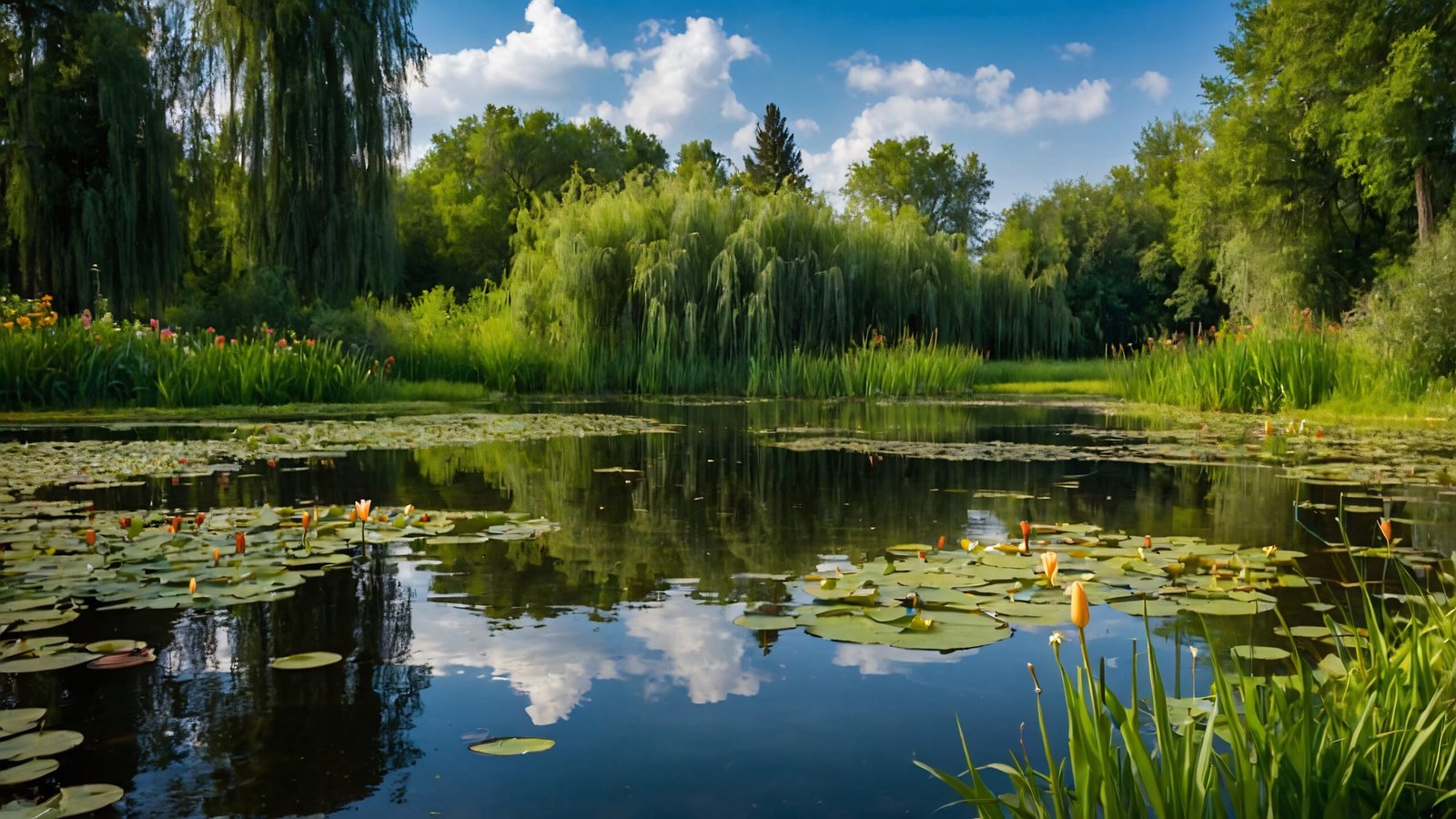
A wildlife pond is best suited to an area of garden set aside as a conservation or ‘back-to-nature’ area. It may be a part of the garden where you choose not to mow the grass, but let it shoot up to provide cover, perhaps even planting a wild flower mix in amongst it. A wildlife pond should be regarded as an electricity and chemical free zone, where through your provision of an aquatic oasis, mother nature’s creative hand will be encouraged to take up residence, seeking out your water hole with her keen sense of smell for aquatic tranquillity. We are to simply act as an aquatic host (or hostess) whereby we set the table for any wildlife guests who take such a shine to our hospitality that they feel inclined to visit and perhaps even take up full time residence and if we’re fortunate, to raise a family.
Construction:
A wildlife pool is probably the simplest of ponds to construct. It follows organic principles where our own input is minimal and only really found at the conception of the pond. This laisez-faire philosophy means there are very limited concerns about running and maintaining a wildlife pond. Our construction will deal with the basic issues of the pond’s size, shape and positioning, all of which will help to determine how attractive our pond will be to passing wildlife. As a wildlife pond is self-sustaining, sufficient space and area must be set aside for plants. Where perhaps in other typical garden fish ponds a pump and filter may help maintain the water quality, in a wildlife pond, it is the wildlife that keeps the pond ‘balanced’.
Fish
Fortunately, as a wildlife pond is just that, one full of native wildlife, to be authentic it should not play host to any ornamental fish. Some conservation pond owners may simply stock sticklebacks or other native fish found in aquatic stores. Minnows are quite well suited to a lightly stocked pond, while other pond owners have been know to stretch reality by stocking black or brown goldfish. If fish are intentionally stocked, then they will be found in their lowest numbers in a wildlife pond. This will mean that little (if any) food should be offered to maintain a small population of fish, relying on the natural productivity and diversity of life in a pond to sustain them. The less food added to a wildlife pond, the less likely plant growth will get out of control.
Besides stocking with fish that will help keep mosquito larvae and other unwanted insects at bay, a wildlife pond can also be given a helping hand at the start by stocking other animal life.
Water snails can be added for their scavenging abilities, helping to break down decaying plant matter or reducing the build up of algal films on plants. If a friend or neighbour has a mature pond, even one that is filtered, ask if you could have a helping of any silt or debris from their pond bottom. Besides stirring up their pond momentarily, the silt will contain a real wealth and diversity of aquatic creepy crawlies (mostly microscopic) that will speed up the colonisation and balance of your new pond. These will be the unsung heroes and the life-sustaining bugs of a wildlife pond. In addition, throwing a couple of bags of daphnia (available from aquatic shops) will also add useful invertebrate life into your pond.
Important design points:
1. Size of the pond. A pond will be more stable if it holds more water. This will make balancing the pond a lot easier as it will not experience extremes of temperature. Having designated an area to be filled by a wildlife pond, set a portion of that area aside for a marsh and bog area.
2. A Marsh / Bog area. If you want to attract a wide variety of species of flora and fauna, then a pond with diverse areas will be able to support them. To this end, a marsh or bog area is very desirable. By definition, this will form the lush margin between the rough grass area and the main body of water. It will also provide a gentle gradient into and out of the pond, enabling amphibians and other more accidental visitors to gain their escape. A more natural method is to lay a branch (perhaps take one from a tree in your garden) so that it lies ‘naturally’ in the pond, touching the bank. This will form a perch for birds and larger flying insects such as dragon and damselflies and provide yet another niche for underwater wildlife. It would also form another means of access for temporary aquatic tenants.
3. Pond Profile:
The gentle gradient from the bog area should continue below water, with further consideration for planting of aquatic flora. These will take the form of more transient surface water plants, and the more permanent potted marginal or deepwater plants. Horizontal shelving, approximately 9 inches below the water’s surface should be provided for the marginal plants while a depth of 2-3 feet in the middle of the pond would allow sufficient depth for a lily or the planting of submerged oxygenating plants – the work horses of the conservation pond. A deep water area would also provide a safe overwintering haven for more permanent residents such as amphibia and fish.
4. Equipment for the conservation pond.
The beauty of creating a conservation pond is in its simplicity. A quality PVC liner with a protective underlay is all the specialist pond equipment you’ll need. Having excavated a hole, the sides and bottom should be pre-lined against protruding stones or roots, which could damage the liner over its 20+ year lifespan.
5. Plants
As there will be no expense on additional pond equipment, a substantial part of your budget will be spent on an array of plants. These will play an instrumental role from the day they are planted, establishing themselves over several months to be the main sustaining factor of your ‘natural’ aquatic ecosystem. You should aim for about 2/3 of water area to be covered with plants to stop algae from being a dominant player in your pond.
Wildlife to expect:
As the pond matures and becomes more stable, it will attract a diversity of organisms that will in turn, cause the wildlife pond to become better balanced.
I am amazed how quickly wildlife seeks out new water bodies. I remember returning to a new pond I had installed only a day after filling it up to do some pointing of pond edging, to be greeted by a frog and two pond skaters.
Other winged insects include damselflies and dragonflies and an array of beetles – such as the whirligigs, which spin on the water’s surface and the predatory Great Diving Beetles.
Below the surface you will soon find lots of invertebrate life such as the ferocious-looking larvae of dragonflies and the water boatmen, which can also give you a nasty little nip.
These are kept in check by a fair selection of fish, frogs or newts, which may cause your pond to become a wriggling mass of fry and tadpoles in spring – food themselves for birds and other fish.
A wildlife pond is not necessarily created with fish in mind, but to your surprise, they still may ‘appear’. Sticklebacks are the likeliest of visitors, being introduced as eggs on bird’s feet.
Building a wildlife pond is definitely a partnership. You provide the canvas, and to some extent the paints, and nature will paint the picture, over many years to produce a feast of moving and living colour. A wildlife pond is not an instant creation, nor is it a project where you have complete control over how it will develop. However, develop it will, and surprise you too as to the diversity and array of wildlife which can be attracted to your garden simply by providing a favourable aquatic environment.
The Stickleback:
Sticklebacks were probably the first fish I ever caught and brought home, keeping one or two quite successfully in a glass bowl. We had a semi-stagnant ditch at the bottom of our garden and these agile, super-fast fish were fair game for the schoolboy with a hand net. It’s only since that I realised that it was because of these fishes’ hardy nature that they could actually colonise and breed in a stinky shallow brook full of silt, twigs and leaf mould. As a result, these undemanding native fish make ideal candidates for a wildlife pond.
Sticklebacks (or Jack-Sharps as they are affectionately known back in my native North West) are fascinating to watch – hovering rather than swimming and very animated (and colourful) during the breeding season. The amorous males become quite aggressive towards intruders (even nipping human flesh – I can testify to that!) when protecting their nest that they have constructed by literally gluing together loose bits of vegetation.
You should not have to feed a loose scattering of sticklebacks in a wildlife pond as they will scavenge and graze on what your pond provides. The most common stickleback is the 3-spined stickleback, getting its name from the 3 spines (used for both aggression and defence) that make up its first of 2 dorsal fins. Sticklebacks do not tolerate other pond fish very well and will ‘nip’ any other fish that bother them. They do stay very small (4-6cm) and conceal themselves very well will camouflage and by diving into the silt. The males’ livery does however take on an extreme contrast when building nests and breeding, showing off an intense red throat and belly. These hardy native tiddlers enjoy nothing more than living in still, warm, organically-rich water – making them ideal for you wildlife pond.