Moving Water Ponds

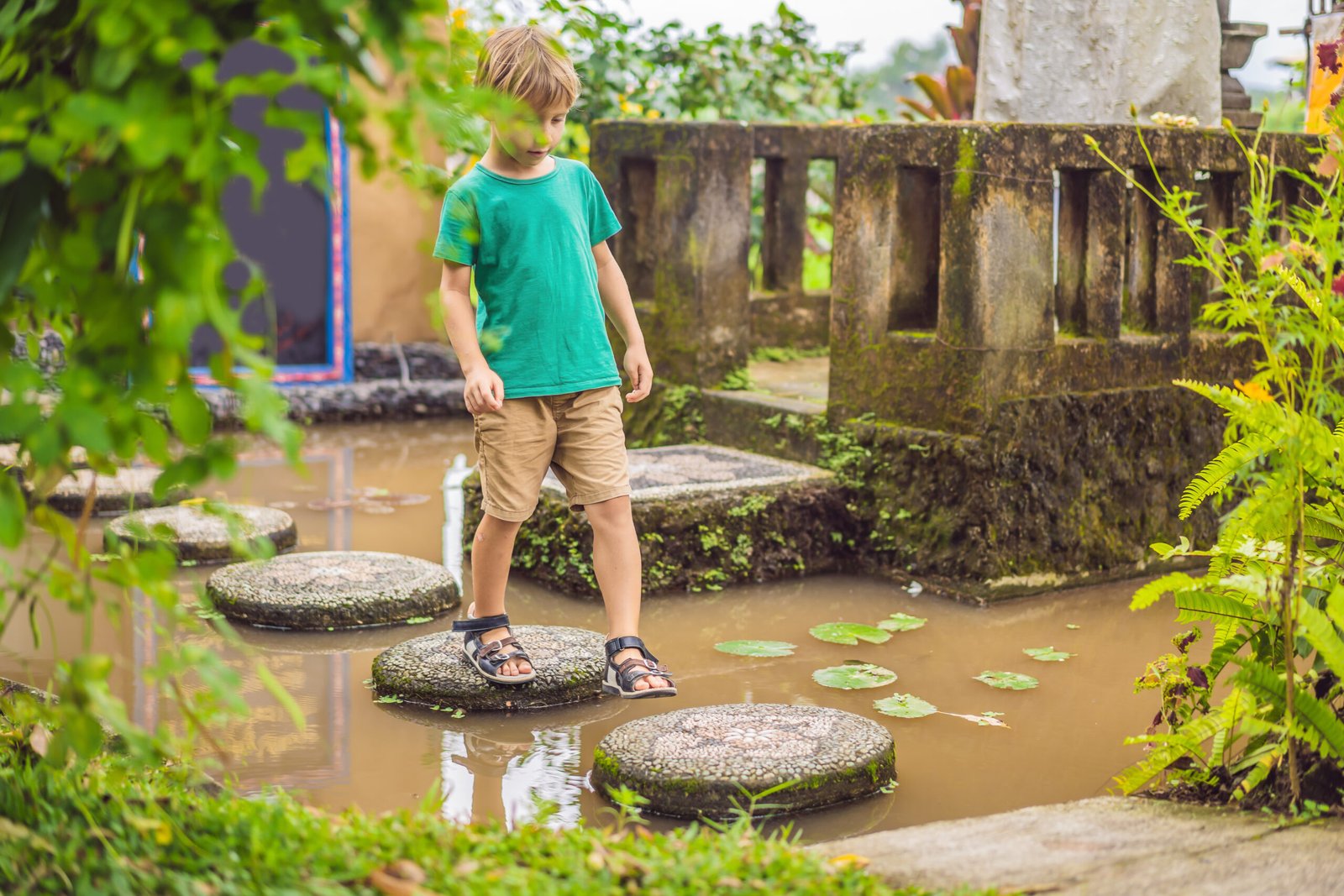
Water flowing from a pipe into a pond, creating ripples on the surface and surrounded by stones.

Moving Water Pond– Dynamic Water Gardening

It is widely regarded that a garden is not complete without a water feature, and that a garden literally comes alive when that water feature involves moving water.

There are a number of alternatives that bring the enchanting atmosphere of moving water to a garden. A new dimension of the sight and sound of water bubbling and sparkling as it tumbles from its source through the sunlight. The erratic, yet natural routes that water chooses to take, producing a similarly random backdrop of hypnotic sounds as it trickles, falls or tumbles into an effervescent pool.

There are three ways to fill your senses with moving water in a garden:

1). A self-contained water feature
2). Water falls to give any pond a living, breathing backdrop.
3). Fountains as a source of aquatic music in a pond

1. A self contained water feature
A garden pond is not compulsory when seeking the benefits of moving water. Self contained water features offer many advantages for introducing those hypnotic qualities to a garden, patio, back yard or even conservatory. Their popularity over the last 5 years has increased at the same phenomenal rate as new and alternative designs of water features have been introduced for our selection. Self contained water features have experienced this rise in popularity, for similar reasons that cats have overtaken dogs as the number one companion animal. They are relatively easy to keep, undemanding and are cheap to run. They suit our busy lifestyles.

Self contained water features make moving water accessible, without having to invest the time, effort and expense of building a pond. They are not installed to house fish or plants and can be switched on or off whenever there is a call for that ‘instant atmosphere’.

Problems that can be common in a pond, such as nuisance algae and green water can easily be managed in a water feature with chemical treatments that do not have to be fish-safe.

Pond and Waterfall

A waterfall is a wonderfully natural addition to a pond, and many ponds incorporate one during construction. While it is possible to add a waterfall later, doing so often presents practical challenges. Once you have introduced a pond into your garden, it makes sense to fully embrace the potential of moving water — adding sound, movement and vitality.

I recently met a water garden installer in the United States who prides himself on his ability to “tune” waterfalls to create the perfect sound for his customers. The sound of falling water is as important as its appearance.

Choosing the Right Pump

A waterfall handles far more water than a standard water feature and can look underwhelming if reduced to a trickle. To achieve a convincing cascade, you will need a dedicated waterfall pump — typically more powerful than a fountain pump.

A proper waterfall pump must:

  • Move a higher volume of water

  • Lift water to greater heights

  • Push water through larger bore pipework

As vertical lift increases, flow rate decreases. If the pump cannot deliver sufficient flow at the required height, your intended torrent will become a disappointing trickle.

As a rule of thumb, for a 6-inch-wide waterfall to be covered with a realistic sheet of water, the pump should deliver approximately 600 gallons per hour at the required head height. Always consult the manufacturer’s performance chart before purchasing.

Managing Water Loss

One advantage of a waterfall over a standalone water feature is the large reservoir — the pond itself. However, this does not eliminate water loss.

Even small amounts of splashing can cause significant drops in pond level over the course of a day. Beyond the inconvenience of frequent topping up, water loss can lead to ground subsidence and structural movement, which may create larger leaks later.

Careful construction significantly reduces these risks.

Waterfall Construction to Avoid Water Loss

Waterfalls commonly lose water through splashing, leaks and evaporation (the latter being unavoidable).

Whether constructed from preformed units or natural stone, the same principles apply.

After excavating both the pond and waterfall channel, purchase a single piece of liner large enough to cover both areas without cutting between them. Although this may seem excessive, it ensures that any splashed or leaking water naturally returns to the pond.

Form stepped levels in the soil to shape the cascade, and lay the liner over these steps. If building a natural stone waterfall, create shallow depressions that will form small pools when the waterfall is not running.

Once the liner is positioned, apply a bed of sand and cement. Preformed cascade units can be placed on this foundation, or natural stone can be embedded into the mortar to create a stepped, informal finish. A lime-neutralising additive should be included in the mortar mix to prevent water quality issues.

Preformed Units

Preformed cascades range from flexible plastic sections to rigid fibreglass and reconstituted stone units. These are designed to interlink and simplify construction.

Although the units themselves are watertight, water can still escape between joints or through splashing. When installed over a continuous liner shared with the pond, any escaped water should return safely.

Natural Stone Waterfalls

York stone is particularly suitable for waterfall construction. This sandstone forms relatively flat surfaces and can be shaped easily.

Stones should be embedded into mortar laid over the waterproof liner. Build from the bottom upward, ensuring that each upper lip overlaps the pool below to direct water forward rather than underneath.

Do not trim excess liner along the sides until the waterfall has been test-run. Observing the water’s natural path will reveal where splashing or overflow occurs, allowing adjustments before final trimming. The liner edges can then be buried discreetly.

For additional security, the finished waterfall can be sealed with an appropriate waterproof sealant, although this is not always essential.

Fountains

Fountains are the simplest method of adding movement to a pond but are not suitable for every setting.

They complement formal ponds with geometric shapes, adding sparkle and symmetry. In naturalistic wildlife ponds, however, fountains may appear artificial and out of place.

Installation is straightforward: fountain heads attach directly to a pump. A wide range of spray patterns, decorative heads and ornaments are available, including illuminated options that add visual drama for evening gatherings.

Choosing the Right Feature

Both waterfalls and fountains introduce movement, sound and oxygenation, but each has its advantages and limitations.

Waterfalls offer natural sound and visual drama but require thoughtful construction and appropriate pump selection. Fountains are easy to install and maintain but suit more formal designs.

At the centre of either feature is a reliable pump — the engine that drives the system and fulfils our innate attraction to the sight and sound of moving water.

Orfe (Ide) Leuciscus idus

More golden than a goldfish and at times too swift for the eye to follow, the orfe is a very popular and undemanding pondfish.

The orfe (or ide) is quite a distant relative of the carp and is more accustomed to the dynamic life of a flowing river. Its streamlined body makes its life an easy one in rivers but also makes it one of the fastest fish in the garden pond. Typically a surface dwelling fish, the orfe can often be seen splashing and taking flies from the surface.

Seen as a shoal of darting slices of peach, flitting in and out of the shelter of lilies and submerged plants, this shy and yet inquisitive fish can become quite tame. Often the first to feed, it is the orfe’s darting activity during feeding time that can alert other fish to the food. An orfe’s character seems to change with age, developing from quite a restless juvenile to a calmer, more sedate lifestyle, often to be seen lazing in the sun at the surface.

Golden orfe are also remarkably fast growing fish, shooting on rapidly to the size of the pond. There are different ‘grades’ of orfe available in the shops, with qualities ranging at the top end with clear blemish-free golden skin through to the less stunning orfe that can show a random arrangement of ‘black pepper spots’ on their dorsal surface. Sometimes this black pigmentation can be so intense that a significant part of the golden orfe is actually black.

A less common variety are the blue orfe. Although the same species as the golden orfe, they can be found in a variety of blue tones from a pale grey right through to black, where the darkest colouration is found on the fish’s top surface. A mixed shoal of contrasting blue and golden orfe can put on a stunning display in any pond.

A highly impressive feature of golden orfe when in top condition are the blood-red fins that are contrasted against the paler flanks of the fish. It is only when you get really close to larger orfe that you can appreciate the real depth and muscular nature of the body. The colouration of both fins and skin can be enhanced to become even more vivid by feeding a colour-enhancing diet.

The orfe is one of the first fish of the year to spawn, being a river fish it breeds at cooler temperatures compared with other pond fish. Typical boisterous spawning activity is observed in mature fish around April to May. Spawning activity can be such a physical affair that we often hear the splashing caused by the spawning activity before we see it. Hundreds of adhesive translucent eggs once released will smother submerged plants and hatch in about 10 days (depending on the water temperature).

Unfortunately, both eggs and fry can be too tempting for other pondfish, feasting on them before they have had a chance to hatch.

Orfe can grow up to 60 cm long and weigh over 3kg, but this size is rarely achieved in garden ponds and they will stop growing according to the size of the pond. They are a carnivorous fish and will easily be tempted by flies and pond skaters, jumping clear of the water in their efforts to catch a tasty morsel. They are easy to cater for with a high quality pond pellet or stick.

Orfe seem to add another dimension to the life of a pond and their rapid growth and sleek lines are a real reward to any caring pondkeeper. Go out and try some!
Share This Article